Sermorelin vs ipamorelin is a comparison between two research peptides that influence growth hormone (GH) release through different biological pathways. Sermorelin is related to growth hormone-releasing hormone (GHRH). Ipamorelin is a ghrelin-receptor agonist. Human studies exist for both, but they have not been compared directly in a robust clinical trial.
Quick answer: Sermorelin vs ipamorelin is a comparison between two peptides that influence pituitary growth hormone release through different receptors. Sermorelin activates the GHRH receptor, while ipamorelin activates the ghrelin receptor. Their clinical histories and evidence limitations differ, and no direct head-to-head human trial establishes which has better efficacy or safety.
How are sermorelin and ipamorelin different?
The clearest difference is their receptor target. Sermorelin is a synthetic form of the active N-terminal fragment of human GHRH. It acts at the GHRH receptor on pituitary somatotroph cells. This receptor normally responds to GHRH released from the hypothalamus.
Ipamorelin belongs to the growth hormone secretagogue family. It activates the growth hormone secretagogue receptor type 1a (GHS-R1a), commonly called the ghrelin receptor. Ghrelin is a gut-derived hormone with effects on appetite and GH secretion. Activation of GHS-R1a can stimulate pituitary GH release through a pathway distinct from the GHRH receptor.
The two pathways can interact physiologically. GHRH and ghrelin-related signalling can produce a combined effect on GH secretion. However, a shared downstream hormone does not make the compounds interchangeable. Their receptor pharmacology and clinical evidence should be evaluated separately.
What has sermorelin research shown?
Sermorelin has a longer clinical history than many research peptides. It has been studied as a diagnostic agent in growth hormone deficiency and in children with idiopathic growth hormone deficiency.
A 2007 review by Barkan and colleagues summarized clinical studies of sermorelin in children. The review reported increased height velocity during treatment in many children with growth hormone deficiency. It also noted that the longer-term effect on final adult height had not been determined. The authors described intravenous and repeated subcutaneous study regimens as generally well tolerated. Transient facial flushing and injection-site pain were among the most commonly reported adverse events.
These findings concern paediatric clinical research and historical diagnostic use. They should not be generalized to healthy adults or other proposed applications. Changes in childhood height velocity do not establish evidence for other outcomes.
The FDA previously approved Geref, a sermorelin acetate product. In a 2013 Federal Register notice, FDA determined that listed Geref presentations had not been withdrawn from sale for reasons of safety or effectiveness. This historic regulatory fact should not be confused with current availability or a broad approval of every sermorelin formulation.
What has ipamorelin research shown?
Ipamorelin has been studied as a selective ghrelin-receptor agonist and GH-releasing peptide. A 1999 human pharmacokinetic and pharmacodynamic study examined ipamorelin in healthy male volunteers. It helped characterize the relationship between exposure and GH response. The study was an early clinical pharmacology investigation, not a trial of long-term clinical benefits.
A later randomized, double-blind, placebo-controlled proof-of-concept trial evaluated ipamorelin in adults recovering from bowel resection surgery. The study enrolled 117 patients, with 114 included in the safety and modified intention-to-treat populations. The primary endpoint was time to tolerance of a standard solid meal. Median time was 25.3 hours in the ipamorelin group and 32.6 hours in the placebo group. The difference was not statistically significant (P = 0.15).
Treatment-emergent adverse events occurred in 87.5% of the ipamorelin group and 94.8% of the placebo group. The FDA's later review of the study noted serious adverse events, including two fatal events in participants assigned to ipamorelin. The FDA briefing also said the relationship between those deaths and ipamorelin was unclear. The study population had undergone major surgery, so causality cannot be inferred from treatment assignment alone.
The FDA has also identified possible immunogenicity concerns for compounded ipamorelin acetate, including peptide aggregation and impurities. It notes that ipamorelin acetate contains unnatural amino acids, which complicate characterization. These concerns relate to compounding quality and available safety data. They should not be rewritten as proof that every research sample or every route has the same risk.
Sermorelin vs ipamorelin: what does the evidence support?
The available evidence supports a mechanistic comparison, not a head-to-head ranking. Sermorelin has published paediatric clinical literature and a historical approved diagnostic product. Ipamorelin has human pharmacology research and a clinical trial in postoperative ileus. Neither evidence base directly answers whether one is better for broad GH-related outcomes.
Sermorelin vs ipamorelin: what does the evidence support
| Feature | Sermorelin | Ipamorelin |
|---|---|---|
| Peptide class | GHRH analogue | Growth hormone secretagogue / ghrelin-receptor agonist |
| Primary receptor | GHRH receptor | GHS-R1a, the ghrelin receptor |
| Main human evidence | Diagnostic and paediatric growth research | Human pharmacology and postoperative ileus trial |
| Key clinical finding | Paediatric studies reported increased height velocity in some children with GH deficiency | Postoperative ileus trial did not meet its primary efficacy endpoint |
| Side-effect evidence | Transient facial flushing and injection-site pain commonly reported in historical paediatric research | Trial reported high overall adverse-event rates in both groups; FDA reviewed serious and fatal events with uncertain causality |
| Regulatory context | Historical FDA-approved Geref product; discontinued presentations were not withdrawn for safety or effectiveness reasons | Not FDA-approved as a medicine; FDA identifies compounding safety concerns |
| Direct comparison | No robust human head-to-head trial identified | No robust human head-to-head trial identified |
Are either sermorelin or ipamorelin FDA-approved?
Sermorelin has a historical U.S. approval record through Geref. FDA's 2013 notice stated that the product presentations had not been withdrawn for reasons of safety or effectiveness. That does not establish that every current compounded or research product is approved.
Ipamorelin is not an FDA-approved medicine. FDA has reviewed ipamorelin acetate in the context of bulk substances nominated for compounding. Its public assessment raises concerns about immunogenicity, peptide impurities and limited safety information for certain routes.
A research-use label does not convert a compound into an approved medicine. Product status must be assessed by the specific substance, formulation, intended use and applicable regulatory pathway.
Research product information
Vitrapep sells ipamorelin for laboratory research use only. It is not for human or veterinary use. See the ipamorelin product page, ipamorelin complete guide, ipamorelin receptor mechanism and sermorelin complete guide.
FAQ
Are sermorelin and ipamorelin the same peptide?
No. Sermorelin is a GHRH analogue. Ipamorelin is a ghrelin-receptor agonist. They activate different receptor systems.
Which receptor does sermorelin activate?
Sermorelin activates the GHRH receptor on pituitary cells involved in growth hormone release.
Which receptor does ipamorelin activate?
Ipamorelin activates GHS-R1a, also known as the ghrelin receptor.
Has sermorelin been studied in humans?
Yes. Human research includes diagnostic studies and paediatric growth hormone deficiency studies. It is not a large modern evidence base for every proposed use.
Has ipamorelin been studied in humans?
Yes. Human pharmacology studies and a postoperative ileus trial have been published. The postoperative trial did not meet its primary efficacy endpoint.
Is there a clinical trial comparing sermorelin and ipamorelin directly?
No robust head-to-head human trial was identified in the cited literature. Their relative efficacy cannot be ranked from indirect comparisons.
What to know now
- Sermorelin and ipamorelin act through different receptors, despite both influencing GH secretion.
- Sermorelin has a historical paediatric and diagnostic research record, while ipamorelin has early pharmacology and postoperative ileus data.
- No direct head-to-head human trial establishes superiority, and FDA has raised specific compounding concerns for ipamorelin acetate.
What we’re watching
- Any new controlled human research that directly compares GHRH-receptor and ghrelin-receptor stimulation.
- FDA updates concerning ipamorelin acetate and bulk drug substance compounding policy.
- Modern studies that define clinically relevant endpoints beyond short-term GH responses.
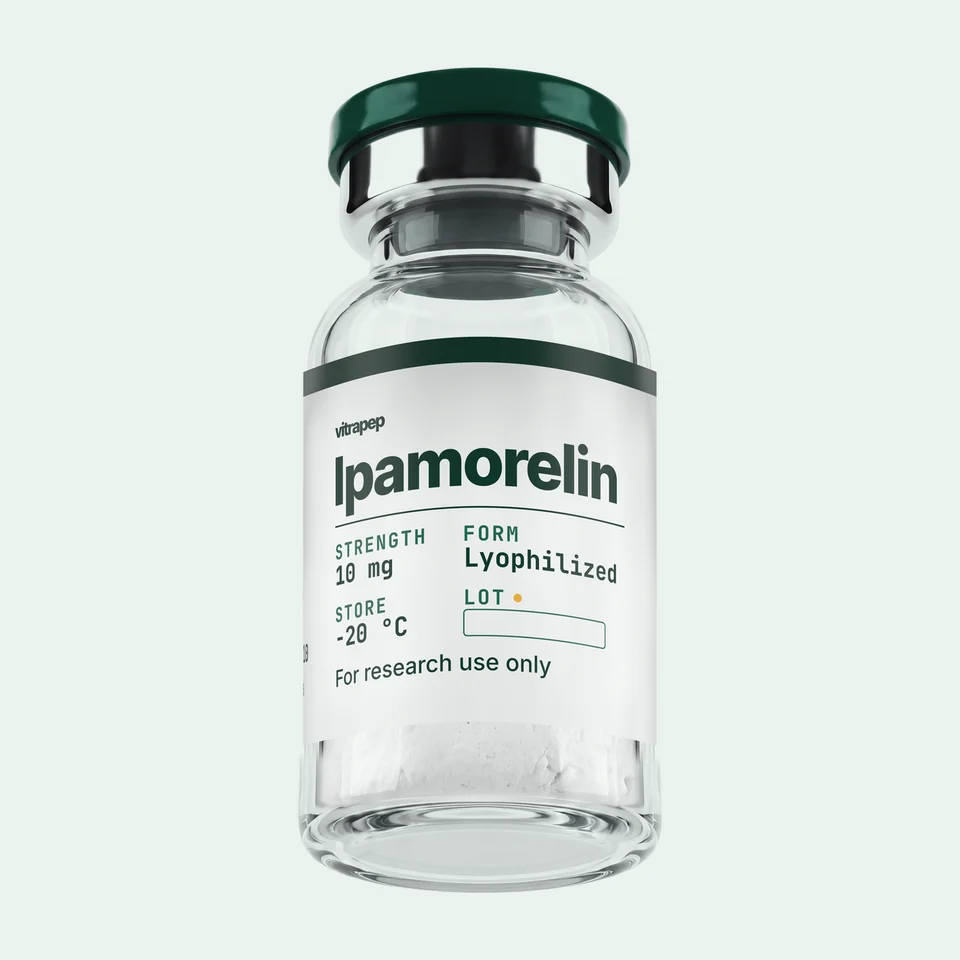
Ipamorelin product page
Specifications for the ipamorelin product page sold for laboratory research. COA available with each lot.