BPC-157 side effects are not well characterized because controlled human safety research remains limited. Small human reports have not described treatment-related adverse events, but their sample sizes and methods cannot establish safety. FDA materials identify important gaps in human safety information and discuss potential immunogenicity and peptide-related impurity concerns.
Quick answer: BPC-157 side effects are not well characterized. Small human reports have not identified treatment-related adverse events, but they are too limited to establish safety. FDA materials warn about potential immunogenicity for certain routes, peptide-related impurities and inadequate human safety information.
What BPC-157 side effects have human studies reported?
Published human reports are small and vary in design and clinical setting. They do not provide a reliable estimate of the frequency of adverse events. A lack of reported events in a small study should not be interpreted as proof that a substance is safe.
A 2021 retrospective report examined BPC-157 in patients with different types of knee pain. Sixteen patients were contacted for follow-up. The report focused on self-reported pain changes and did not use specific validated measures for function, quality of life, stiffness or daily activities. The paper does not provide the kind of controlled safety dataset needed to characterize uncommon or delayed adverse events (Lee & Padgett, 2021).
A 2024 pilot study described 12 women with interstitial cystitis who received BPC-157 in a private-clinic setting. The authors reported that no adverse events occurred among the participants. This was a small uncontrolled pilot report in a specific patient group. It cannot establish the absence of risk in other populations, routes or product formulations (Lee et al., 2024).
A 2025 pilot study examined BPC-157 in two participants. The report did not identify treatment-related adverse events in that very small group. Two participants cannot reveal the incidence of uncommon events or assess long-term safety (Lee & Burgess, 2025).
A 2026 systematic review assessed the human literature available through June 1, 2026. It identified three studies involving 30 people: a retrospective knee-pain study with 16 participants, an interstitial-cystitis pilot with 12 participants and a two-person safety pilot. The review reported that the studies did not describe treatment-related adverse events, but judged them to be of poor methodological quality. Its overall certainty rating was very low (Poolton et al., 2026).
What did the human evidence include?
What did the human evidence include
| Study | Population and size | Safety information reported | Important limitation |
|---|---|---|---|
| Lee & Padgett (2021) | Retrospective knee-pain follow-up; 16 people contacted | Not a controlled safety study; adverse-event characterization is limited | Small retrospective design and no validated functional measures |
| Lee et al. (2024) | 12 women with interstitial cystitis | Authors reported no adverse events | Small uncontrolled pilot in a single clinical context |
| Lee & Burgess (2025) | Two-participant safety pilot | Authors reported no adverse events | Two participants cannot characterize frequency or long-term risk |
| Poolton et al. (2026) | Systematic review of the three reports above; 30 participants total | No treatment-related events were reported in the included studies | Review rated study quality poor and certainty very low |
The table summarizes what the publications reported. It does not establish that adverse events cannot occur. The studies are too small to detect uncommon reactions and do not establish a comprehensive long-term safety profile.
What safety concerns has the FDA identified?
FDA materials state that there is insufficient clinical safety information to characterize BPC-157. In its 2026 Pharmacy Compounding Advisory Committee materials, the agency noted gaps in safety information for BPC-157 free base and acetate. The FDA also stated that it had not identified human studies using several proposed routes discussed in the review materials (FDA, July 2026 PCAC Materials).
The FDA identifies potential concerns involving immunogenicity for certain routes of administration. Immunogenicity refers to the possibility that a substance may prompt an immune response. FDA materials also discuss peptide-related impurities and difficulties with active pharmaceutical ingredient characterization. These are potential safety concerns identified by the agency, not a list of confirmed adverse reactions observed in a controlled BPC-157 trial (FDA, Certain Bulk Drug Substances).
The agency's discussion is especially relevant to compounded products. It states that limited or absent safety-related information means the agency lacks sufficient information to know whether the drug would cause harm when administered to humans by the proposed routes. That statement should be reported accurately. It is not proof that a specific adverse event has occurred, but it is also not reassurance that a product is safe.
What do animal studies say about safety?
Preclinical studies have explored BPC-157 in several animal models. Some publications describe no obvious adverse effects under their experimental conditions. However, animal studies designed to examine injury repair or biological activity do not necessarily provide a complete toxicology profile.
A systematic review of BPC-157 in orthopaedic sports medicine identified 36 studies published through June 2024. Thirty-five were preclinical and one was clinical. The review described the safety evidence as insufficient for clinical conclusions and noted that human safety data were lacking (Jahangir et al., 2025).
A later systematic review focused on human evidence and concluded that the available human data were very low certainty. Its assessment was based on small reports with serious risk of bias, indirectness and imprecision (Poolton et al., 2026). These reviews reinforce the distinction between observations in animal models and a well-established human safety profile.
Is BPC-157 FDA approved?
BPC-157 is not a component of an FDA-approved drug. FDA materials identify BPC-157 as a bulk drug substance with potential significant safety risks in compounding. The agency's review highlights limited human safety information, possible immunogenicity for certain routes, and peptide-related impurity and characterization concerns (FDA, Certain Bulk Drug Substances).
A research-use label does not turn an unapproved substance into an FDA-approved medicine. The regulatory status of an investigational substance and the legal requirements for a particular product or use depend on the applicable rules. Any claim about regulatory status should be tied to the specific substance, product category and intended use.
ClinicalTrials.gov lists a Phase 2 study of BPC-157 for acute hamstring muscle strain repair under NCT07437547. Trial registration describes a research plan, not a finding. Until results are published, the record cannot establish effectiveness or safety (ClinicalTrials.gov, NCT07437547).
What remains unknown about BPC-157 safety?
Several core safety questions remain unresolved. The available studies do not establish the rate of common adverse events, the likelihood of rare events or the potential for delayed effects. They also do not establish whether safety differs across formulations, routes, production methods or patient populations.
Product identity and quality are additional questions. Peptide-related impurities and variation in active pharmaceutical ingredient characterization can affect the material being tested. A result from one publication cannot automatically be applied to a different product unless the molecular identity, formulation and relevant quality characteristics are comparable.
The small human reports should therefore be described as preliminary observations. They should not be used to make broad statements such as "no side effects," "safe" or "well tolerated" without identifying the small study and its limitations. The current evidence does not support those general conclusions.
Frequently asked questions
What are the known side effects of BPC-157?
The human side-effect profile is not established. Small published reports did not describe treatment-related adverse events, but they are too limited to establish safety or estimate event rates.
Have human studies reported adverse events?
A 2024 pilot study involving 12 women and a 2025 pilot involving two participants reported no adverse events. These studies were small and cannot characterize uncommon or long-term risks.
Does the FDA consider BPC-157 safe?
FDA materials state that there is insufficient human safety information to characterize BPC-157 and identify potential concerns involving immunogenicity and peptide-related impurities.
Is BPC-157 FDA approved?
No. FDA materials state that BPC-157 is not a component of an FDA-approved drug.
Are BPC-157 animal studies enough to establish human safety?
No. Animal studies provide preclinical information. They do not establish human adverse-event rates or long-term safety.
For additional context, see the BPC-157 complete guide, the BPC-157 sourcing guide and the Vitrapep research library.
Vitrapep research material
Vitrapep sells BPC-157 for laboratory research use only. It is not for human or veterinary use.
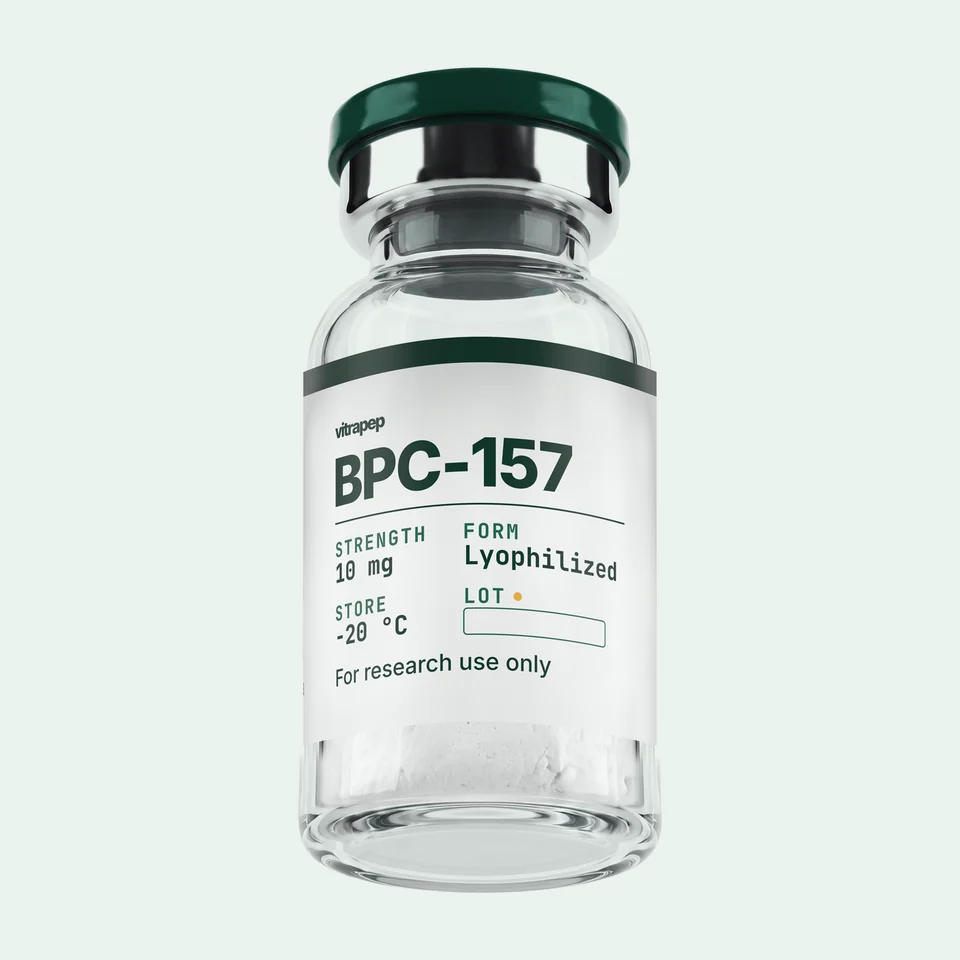
BPC-157
Specifications for the BPC-157 sold for laboratory research. COA available with each lot.
What to know now
- Human BPC-157 safety evidence consists of small reports, not large controlled safety trials.
- The 2026 human systematic review rated the certainty of evidence very low.
- FDA materials identify insufficient human safety information and potential immunogenicity and impurity concerns.
What we’re watching
- ClinicalTrials.gov record NCT07437547 lists a Phase 2 BPC-157 study for acute hamstring strain repair. The record should be checked for updates and posted results.
- Additional controlled human studies and formal toxicology data would be needed to characterize adverse-event frequency and longer-term safety.