Peptides and the FDA moved on several fronts in 2026. By April, FDA listed BPC-157 and other peptides as previously in a compounding safety-risk category. An advisory committee then discussed seven of them, and HHS published a draft policy on compounding certain peptides.
Quick answer: What changed for peptides at the FDA in 2026? BPC-157 and several other peptides are now listed as previously in category 2, after their nominations were withdrawn. An advisory committee discussed seven peptides in July, with no outcome posted by FDA. HHS issued a draft compounding policy in October. Warning letters to online sellers continued. None of these steps made any research peptide an approved drug.
How compounding rules apply to peptides
A compounded drug is not an approved drug. HHS’s October 2026 notice says compounded drugs are not FDA-approved, “which means FDA does not review their safety, effectiveness, or quality before they are marketed.”
Under section 503A of the Federal Food, Drug, and Cosmetic Act, a pharmacy may compound with a bulk drug substance only if it meets one of three tests, listed on FDA’s 503A page: a USP or NF monograph, a component of an FDA-approved drug, or a place on the 503A bulks list. While that list is built, FDA sorts nominated substances into interim categories. Category 1 substances were nominated with enough support for FDA to evaluate them. Category 2 covers significant safety risks. Category 3 substances had too little support.
BPC-157 and others: “previously in category 2”
FDA’s safety-risks page, current as of April 22, 2026, has a table headed “Bulk drug substances nominated but withdrawn.” It describes them as substances “previously in category 2 of the interim policies” that the nominators withdrew.
The table has 17 entries: AOD-9604, BPC-157, cathelicidin LL-37, CJC-1295, dihexa acetate, emideltide (DSIP), Epitalon, GHK-Cu (for injectable routes), ipamorelin acetate, KPV, pegylated mechano growth factor, melanotan II, MOTs-C, Selank acetate, Semax, thymosin alpha 1, and the thymosin beta-4 fragment known as TB-500. The BPC-157 entry still notes possible immunogenicity and says FDA lacks sufficient information to know whether it would cause harm in humans.
Withdrawn is not approved, and the move did not put these substances on the 503A bulks list. Kisspeptin-10 (503A) and GHRP-2, GHRP-6 and ipamorelin acetate (503B) remain in category 2, each added on September 29, 2023. FDA notes that ipamorelin acetate appears in both tables because it is still in category 2 under the 503B interim policy. The background is in our guide to the 2023 FDA 503A peptide list.
The July 2026 advisory committee meeting
FDA’s Pharmacy Compounding Advisory Committee met on July 23 and 24, 2026. Its Federal Register notice says the committee’s function is “to provide advice and recommendations to FDA on regulatory issues.” The agenda listed the free base and acetate forms of seven peptides “being considered for inclusion on the 503A Bulks List”: BPC-157, KPV, TB-500 and MOTs-C on July 23, and emideltide, Semax and Epitalon on July 24.
The meeting page, current as of August 6, 2026, posts FDA’s briefing documents and presentations but no minutes, vote results or transcript. News reports have described committee votes, but FDA has not posted them, so this page gives no tally. Our page on whether BPC-157 is legal covers that peptide in detail.
HHS’s October 2026 draft peptide policy
On October 30, 2026, the Federal Register published a notice from the Secretary of Health and Human Services announcing an enforcement discretion policy for 503A compounding with certain peptides (docket HHS-OASH-2026-0496). Its core sentence says HHS “does not intend to take enforcement action against a State-licensed pharmacy, Federal facility, or licensed physician compounding a drug product using a peptide bulk drug substance found in Appendix A.” The notice cites the advisory committee meetings and peptide use data, and gives its aim as “to expand and improve patient access.”
- Draft. The policy “is not binding on HHS or the public.” Comments were open for two weeks after publication.
- Interim. It applies while the 503A bulks list “is developed through rulemaking.” FDA’s future rulemakings “may propose adding some or all of these peptides” to that list.
- Narrow. It names three kinds of compounder and no other sellers.
- Revocable. HHS may revisit it if, among other things, a safety signal or product quality issue arises.
Appendix A, on the HHS website, names the covered peptides.
GLP-1s: the shortages and the 2026 actions
FDA’s compounding policy page records the end of both shortages. On December 19, 2024, FDA determined “the tirzepatide injection shortage is resolved.” On February 21, 2025, it found the semaglutide shortage resolved. By April 1, 2026, FDA wrote: “Tirzepatide and semaglutide do not currently appear on the 503B bulks list or on FDA’s drug shortage list.”
In 2026, FDA said on February 6 that it intends to “restrict GLP-1 active pharmaceutical ingredients (APIs) intended for use in non-FDA-approved compounded drugs.” On April 30 it proposed to keep semaglutide, tirzepatide and liraglutide off the 503B bulks list because it “did not identify a clinical need.” Comments closed on July 30, 2026, and we found no final determination in the Federal Register as of November 17, 2026. Separately, FDA states that “Retatrutide and cagrilintide cannot be used in compounding under federal law.” See compounded semaglutide, compounded tirzepatide and is retatrutide legal.
Peptide actions at FDA and HHS in 2026
| Date | What happened |
|---|---|
| February 6, 2026 | FDA plans to restrict GLP-1 APIs for non-approved compounded drugs |
| March 3, 2026 | 30 warning letters to telehealth companies over compounded GLP-1 claims |
| March 31, 2026 | Warning letter to Gram Peptides |
| By April 22, 2026 | BPC-157 and 16 others listed as nominated but withdrawn, previously in category 2 |
| April 30, 2026 | Proposal to keep semaglutide, tirzepatide and liraglutide off the 503B bulks list |
| June 17, 2026 | Warning letter to Wholesale Peptide |
| July 23–24, 2026 | Advisory committee discusses seven peptides for the 503A bulks list |
| August 24, 2026 | Warning letters to TXP Innovations (Tex Peptides) and Peptide Partners |
| October 30, 2026 | HHS draft peptide enforcement discretion policy published |
Warning letters: labels versus intended use
FDA decides whether a product is a drug by its intended use. Under 21 CFR 201.128, that means the “objective intent” of the people responsible for the labeling, which “may be shown by such persons’ expressions, the design or composition of the article, or by the circumstances surrounding the distribution of the article.”
FDA’s letters to online peptide sellers apply that rule. A December 2024 letter to Summit Research Peptides and the 2026 seller letters in Table 1 each quote disclaimers such as “research use only.” Each then finds, from the seller’s own website or labeling, that the products are intended to be drugs for human use. FDA’s GLP-1 concerns page also reports warnings to companies selling products “falsely labeled ‘for research purposes’ or ‘not for human consumption.’”
Where research-use peptides fit
The HHS draft policy covers compounding by pharmacies, federal facilities and licensed physicians. It does not address reagent sellers. Research labeling is its own category, explained in what research use only means and are peptides legal in the USA. As the letters show, how a product is described and sold counts too.
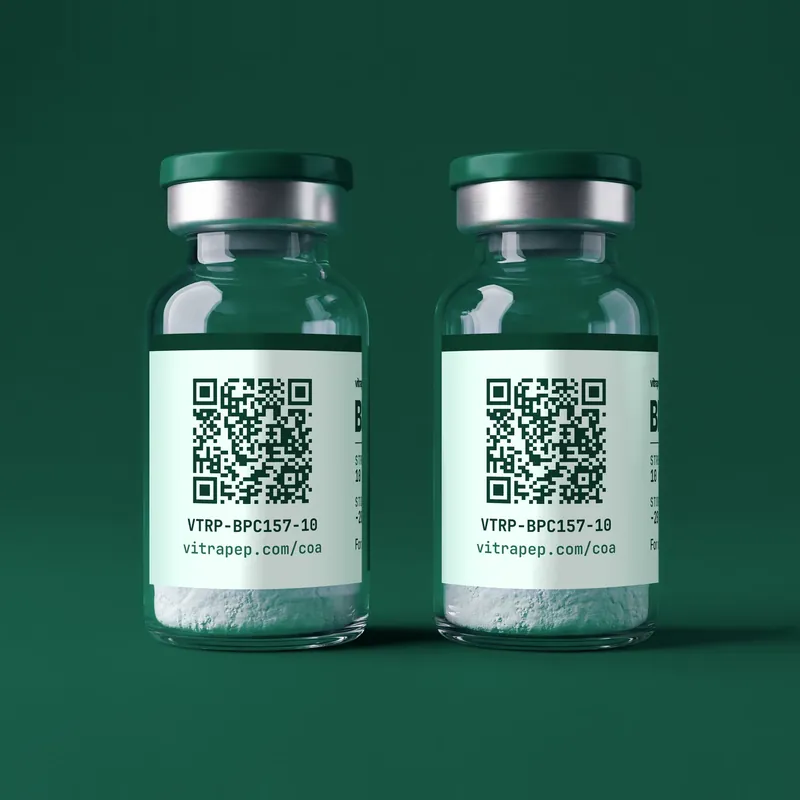
Vitrapep Research Catalog
Research peptides supplied as laboratory reference compounds, each lot with a third-party certificate of analysis. For laboratory research use only, not for human or veterinary use.
Frequently asked questions
Is BPC-157 still in FDA category 2?
No. FDA’s page, current as of April 22, 2026, lists it as previously in category 2, withdrawn by its nominators. The Federal Register shows no rule adding it to the 503A bulks list as of November 17, 2026.
Did the FDA advisory committee approve BPC-157?
No. The committee gives advice; it does not approve drugs or change lists. FDA has not posted minutes or vote results from the July 2026 meeting.
What does the HHS peptide policy do?
It is a draft, non-binding statement that HHS does not intend to take enforcement action against certain compounders using the peptides in its Appendix A, while the 503A bulks list is developed through rulemaking.
Does a “research use only” label settle a product’s status?
No. FDA judges intended use from labeling, marketing and the circumstances of sale.
What to know now
- Category 2: BPC-157 and 16 others are now previously in category 2. Kisspeptin-10, GHRP-2, GHRP-6 and ipamorelin acetate remain.
- Not listed: withdrawal put none of them on the 503A bulks list.
- Advisory committee: seven peptides discussed in July 2026; no minutes or votes posted by FDA.
- HHS draft policy: published October 30, 2026; certain compounders only; not binding.
- GLP-1s: shortages resolved; 503B exclusion proposed for semaglutide, tirzepatide and liraglutide.
- Labels: FDA looks past “research use only” wording to how a product is sold.
What we’re watching
Minutes or vote results from the July 2026 committee meeting. A final version of the HHS peptide policy. Any FDA rulemaking proposing peptides for the 503A bulks list. A final decision on the 503B proposal for semaglutide, tirzepatide and liraglutide.