Peptides in skincare are short amino-acid chains added to creams and serums as cosmetic ingredients. Reviews sort them into a few classes by how they are proposed to act, and ingredient labels list them under standardized INCI names. This page covers the classes, the names, the evidence, and the US line between cosmetics and drugs.
Quick answer: What are peptides in skincare? They are short peptides, mostly synthetic and often with a fatty acid or acetyl group attached, used as cosmetic ingredients. They are grouped as signal, carrier, neurotransmitter-inhibitor or enzyme-inhibitor peptides. The evidence base is real but thin, and whether a peptide product is a cosmetic or a drug depends on what it claims to do.
How cosmetic peptides are grouped
The usual scheme has four classes. Gorouhi and Maibach’s 2009 review sorted topical peptides into signal peptides, enzyme-inhibitor peptides, neurotransmitter-inhibitor peptides and carrier peptides. A 2025 review uses the same four, classified by mechanism of action.
Not every author agrees. Lupo and Cole’s 2007 review lists three main categories: signal, neurotransmitter-affecting and carrier peptides. Errante and colleagues’ 2020 review also uses three, and mentions enzyme inhibition only for individual peptides such as GHK-R4.
The four classes of cosmetic peptides
| Class | Proposed action, as reviews describe it | Example in the literature |
|---|---|---|
| Signal peptides | Modulate skin protein turnover, mostly by enhancing collagen production | Palmitoyl Pentapeptide-4 (pal-KTTKS) |
| Carrier peptides | Stabilize or deliver metal ions such as copper(II) into cells | Copper Tripeptide-1 (GHK-Cu) |
| Neurotransmitter-inhibitor peptides | Mimic part of SNAP-25, a SNARE protein, and interfere with neurotransmitter release | Acetyl Hexapeptide-8 (Argireline) |
| Enzyme-inhibitor peptides | Reduce the activity of enzymes such as matrix metalloproteinases (MMPs) | GHK-R4, reported to show an MMP-inhibitory effect |
The descriptions in Table 1 follow the Errante review. It says signal peptides modulate skin protein turnover, most of them by enhancing collagen production, and that peptides can stabilize or deliver Cu(II) into cells. It explains that Argireline’s sequence covers the N-terminal domain of SNAP-25, part of the SNARE complex that drives neurotransmitter release, and that GHK-R4 showed an MMP-inhibitory effect. Our overview of skin and cosmetic peptides goes compound by compound, and types of peptides covers wider classification.
INCI names on the label
Cosmetic labels use INCI names (International Nomenclature of Cosmetic Ingredients). The peptide names describe chemistry, not effect. “Palmitoyl Pentapeptide-4” is a pentapeptide, five residues long, with a palmitoyl (fatty acid) group attached; its published sequence is pal-KTTKS. “Acetyl” marks an acetyl group on the chain. The same peptide can also carry a trade name and an older name, which is why one ingredient can appear under several labels.
Common INCI names and their sequences
| INCI name | Sequence as published | Other names |
|---|---|---|
| Palmitoyl Pentapeptide-4 | Palmitoyl-Lys-Thr-Thr-Lys-Ser (pal-KTTKS) | Matrixyl (trade name) |
| Tripeptide-1 | Gly-His-Lys (GHK) | Glycyl-histidyl-lysine |
| Copper Tripeptide-1 | GHK bound to copper(II) | GHK-Cu |
| Palmitoyl Tripeptide-1 | Tripeptide-1 (GHK) with a palmitoyl group | A fatty acyl derivative of Tripeptide-1 in CIR’s grouping |
| Acetyl Hexapeptide-8 | Ac-Glu-Glu-Met-Gln-Arg-Arg-NH2 (Ac-EEMQRR-NH2) | Argireline (trade name); acetyl hexapeptide-3 in older papers |
The US Cosmetic Ingredient Review (CIR) Expert Panel publishes safety assessments by INCI name. Its 2018 report covered Tripeptide-1, Hexapeptide-12, their metal salts and fatty acyl derivatives, and Palmitoyl Tetrapeptide-7, which it says function primarily as skin conditioning agents. Palmitoyl Tripeptide-1 and Copper Tripeptide-1 are among the ingredients it lists as used in cosmetics. The panel concluded they are safe in cosmetics in present practices of use and concentration. A 2025 CIR report assessed an ingredient named Acetyl Hexapeptide-8 Amide. It found it safe in present practices of use at concentrations up to 0.005%, and the data insufficient to judge safety above that.
What the published evidence shows
Several of these peptides have controlled human studies. The results are mixed, and the studies are small.
- Palmitoyl pentapeptide-4. A 2005 study of 93 women aged 35 to 55 used a 12-week, double-blind, placebo-controlled, split-face design. The moisturizer with pal-KTTKS gave significant wrinkle and fine-line improvement against the same moisturizer without it. See our Matrixyl guide.
- Acetyl hexapeptide-8. The 2002 paper that introduced it reported that it inhibited neurotransmitter release in mechanism studies, with much lower efficacy than botulinum toxin A. A 2013 randomized, placebo-controlled study of 60 subjects reported reduced skin roughness around the eyes. A 2023 double-blind, split-face study of 19 women found no significant difference between the sides with and without it. See our Argireline guide.
- GHK-Cu. A 2015 review notes that GHK is present in human plasma, saliva and urine, and proposes that it acts as a complex with copper. Our GHK-Cu guide covers the studies in detail.
Two limits recur across the literature. The first is penetration. A 2025 review of acetyl hexapeptide-8 notes that its hydrophilic nature and size limit its passage through the stratum corneum, and that its ability to reach the neuromuscular junction remains uncertain. The 2025 classification review names poor permeability as one of the most significant drawbacks of cosmetic peptides in general.
The second is study quality. A 2026 review of peptides in aesthetic dermatology found that controlled human studies report gains in some skin measures, but that many trials are limited by small samples, short follow-up, industry sponsorship or multi-ingredient formulations. It concludes that results apply to specific products, not to whole classes. The 2020 review notes that for one commercial peptide, the only available data came from the manufacturer.
Cosmetic or drug: how US law decides
In US law, a product’s intended use decides the category. The FDA’s page on whether a product is a cosmetic, a drug or both sets out the definitions from the Federal Food, Drug, and Cosmetic Act. Cosmetics are articles applied to the human body for cleansing, beautifying, promoting attractiveness or altering the appearance. Drugs include articles intended for the diagnosis, cure, mitigation, treatment or prevention of disease, and articles (other than food) intended to affect the structure or any function of the body. Intended use is shown by claims in labeling, advertising and online, by consumer perception, and by ingredients with a well-known therapeutic use.
The FDA applies this directly to anti-aging products. Its page on wrinkle treatments says a product meant to make lines less noticeable by moisturizing the skin is a cosmetic. A product intended to remove wrinkles or increase the skin’s production of collagen is a drug or a medical device. That matters for signal peptides: pal-KTTKS, for example, was designed to stimulate collagen production.
The approval rules differ sharply. The FDA states that cosmetic products and ingredients do not need FDA premarket approval, except color additives, and that makers have a legal responsibility for safety. Drugs generally must either receive FDA premarket approval through a New Drug Application or conform to a monograph from FDA’s over-the-counter drug review. The Modernization of Cosmetics Regulation Act of 2022 (MoCRA), signed into law on December 29, 2022 as part of a spending act, added facility registration, product listing with ingredients, serious adverse event reporting, and records of safety substantiation.
Research peptides sold as laboratory reagents are a separate case again; see what research use only means.
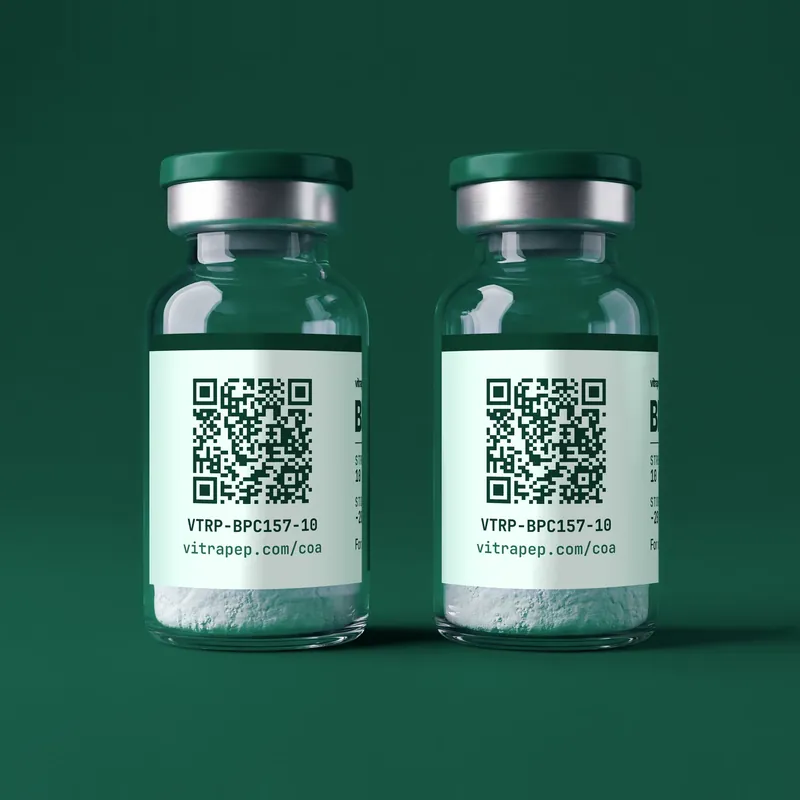
Vitrapep Research Catalog
Research peptides supplied as laboratory reference compounds, each lot with a third-party certificate of analysis. For laboratory research use only, not for human or veterinary use.
Frequently asked questions
What are the four types of cosmetic peptides?
Signal, carrier, neurotransmitter-inhibitor and enzyme-inhibitor peptides. Some reviews use three classes and leave out enzyme inhibitors.
What is the INCI name for Argireline?
Acetyl Hexapeptide-8, as a 2024 paper notes. Older papers call it acetyl hexapeptide-3. Its published sequence is Ac-Glu-Glu-Met-Gln-Arg-Arg-NH2.
Is Copper Tripeptide-1 the same as GHK-Cu?
Yes. Tripeptide-1 is the sequence Gly-His-Lys, and Copper Tripeptide-1 is its copper complex.
Do peptide creams need FDA approval?
Not if they are cosmetics. Cosmetics do not need FDA premarket approval. A product intended to remove wrinkles or increase collagen production is a drug or device under FDA’s reading, and drugs generally need approval.
Do skincare peptides get through the skin?
Penetration is a known limit. Reviews describe poor permeability through the stratum corneum as a major drawback, and formulation work aims to improve it.
What to know now
- Four classes: signal, carrier, neurotransmitter-inhibitor and enzyme-inhibitor peptides; some reviews use three.
- Names: INCI names such as Palmitoyl Pentapeptide-4 and Acetyl Hexapeptide-8 describe chemistry, such as chain length and attached groups, not effect.
- Evidence: controlled studies exist, but many are small, short, industry-sponsored or test multi-ingredient products.
- Penetration: poor passage through the stratum corneum limits topical peptides.
- Law: the claim decides. Moisturizing claims are cosmetic; collagen-production claims make a product a drug or device.
- MoCRA: since 2022, US cosmetic makers face registration, listing and adverse event duties, but still no premarket approval.
What we’re watching
MoCRA is still being put into practice. In January 2026 the FDA issued draft guidance on its records access authority for cosmetic products. On the science side, the 2026 aesthetic dermatology review calls for studies that link verified peptide exposure to objective clinical outcomes.