SARMs vs peptides is a chemistry question first. Peptides are chains of amino acids. SARMs, short for selective androgen receptor modulators, are small synthetic molecules made to bind the androgen receptor. The two are often sold by the same websites and both appear on sport’s banned list, but they differ in structure, in the receptors they act on, and in how US law treats them.
Quick answer: SARMs and peptides are different kinds of molecule. Are SARMs legal? No SARM is approved by FDA for any use, and FDA has warned companies that sell them for human use. They are not federal controlled substances as of the DEA’s November 12, 2026 list. Some peptides are approved prescription drugs; research peptides sold for lab use are not. Athletes under the WADA Code may not use SARMs at any time.
What a peptide is
IUPAC, the body that sets chemical naming rules, defines a peptide as any compound produced by amide formation between a carboxyl group of one amino acid and an amino group of another. Those amide bonds are called peptide bonds, and the order of the amino acids is the identity of the peptide. BPC-157, for example, is reported to contain 15 amino acids (FDA briefing document, 2026).
Our primer on what peptides are covers the class in more depth.
What a SARM is
SARMs are synthetic compounds that bind the androgen receptor, the receptor testosterone acts on. The androgen receptor is a member of the steroid hormone receptor family, and SARMs were developed to activate it in a tissue-selective way (Narayanan et al., 2018). Unlike testosterone, they are not steroids. A 2017 study in JAMA describes them as nonsteroidal (Van Wagoner et al., 2017), and a 2018 Senate bill defined a SARM as a selective androgen receptor agonist “chemically unrelated to testosterone” (S. 2742).
They are small molecules. Enobosarm, also called ostarine, has the formula C19H14F3N3O3 and a molecular weight of 389.3 (PubChem). WADA names andarine, enobosarm, LGD-4033 (ligandrol), RAD140, S-23 and YK-11 as examples of SARMs.
Peptides and SARMs, side by side
| Attribute | Peptides | SARMs |
|---|---|---|
| Structure | Amino acids joined by amide (peptide) bonds | Small synthetic non-steroidal molecules |
| Example | BPC-157, reported as 15 amino acids | Enobosarm (ostarine), C19H14F3N3O3, molecular weight 389.3 |
| Typical receptors | Many act on cell-surface receptors, such as G protein-coupled receptors | The androgen receptor, a member of the steroid hormone receptor family |
| FDA approval | Some peptides are approved drugs; research peptides are not | None approved; FDA calls marketed SARM products unapproved drugs |
| DEA controlled substances list | No class entry | Not listed (November 12, 2026 edition) |
| WADA 2026 list | S2 (peptide hormones and related substances); S0 for non-approved substances | S1.2 (other anabolic agents) |
How they act at the receptor level
In general terms, the two classes reach cells differently. Many of the body’s own peptides activate G protein-coupled receptors, a family of receptors on the cell surface. A 2020 review counted nearly 50 approved peptide drugs that target them (Davenport et al., 2020).
SARMs target one receptor, the androgen receptor. As a steroid hormone receptor, it belongs to a superfamily of receptors that regulate gene transcription inside the cell (Evans, 1988). That is the general picture only. It says nothing about what any particular compound does.
Legal status in the US: are SARMs legal?
This section summarizes public FDA, DEA and congressional records. It is not legal advice.
FDA. FDA states that SARMs “have not been approved by the FDA” and that products containing them are “unapproved drugs that FDA has not reviewed for safety and effectiveness.” It adds that although these products are generally marketed as dietary supplements, “they are not dietary supplements” (FDA, 2025). FDA says it has issued warning letters to companies selling products marketed as SARMs and has pursued criminal actions against distributors. The same page reports life-threatening reactions, including liver injuries that required hospitalization, in people taking products containing SARMs.
One example is FDA’s June 12, 2023 warning letter to an online seller of products named as RAD-140, MK-2866 ostarine and LGD-4033 ligandrol, along with BPC-157. The products carried “research purpose only” and “not for human consumption” statements. FDA wrote that evidence from the seller’s website established that the products were intended as drugs for human use, and called them unapproved new drugs sold in violation of sections 505(a) and 301(d) of the Act.
What is sold as a SARM online is not always a SARM. Of 44 products marketed as SARMs and bought online, only 23 (52%) contained one, 17 (39%) contained another unapproved drug, and only 18 (41%) matched the labeled amount of active compound (Van Wagoner et al., 2017).
DEA. SARMs do not appear on the DEA’s alphabetical list of controlled substances, edition dated November 12, 2026 (DEA). Anabolic steroids are on it, in Schedule III. Congress has considered changing that. The SARMs Control Act of 2018 (S. 2742) would have added SARMs to Schedule III, and the SARMs Control Act of 2019 (S. 2895) would have amended the Controlled Substances Act to regulate them. Each was read twice and referred to the Senate Judiciary Committee on the day it was introduced, with no later action recorded (S. 2742 status; S. 2895 status). State laws can differ, and we have not surveyed them. Not being a controlled substance does not make a product approved or lawful to sell as a drug.
Peptides. The DEA list has no class entry for peptides. Some peptides are approved medicines: a 2021 review counted more than 80 peptide drugs on the market (Muttenthaler et al., 2021). Research peptides sold as laboratory reagents are not approved drugs, and the same intended-use rule applies to them: FDA judges a product by objective evidence such as labeling, advertising and how it is sold (21 CFR 201.128). See are peptides legal in the USA and research use only, explained.
Sport rules: WADA lists both
The World Anti-Doping Agency’s 2026 Prohibited List, in effect since January 1, 2026, prohibits both groups at all times, in and out of competition. SARMs sit in S1.2, Other anabolic agents, which names andarine, enobosarm (ostarine), LGD-4033 (ligandrol), RAD140, S-23 and YK-11. Anabolic androgenic steroids sit separately in S1.1.
Peptides appear in S2, Peptide hormones, growth factors, related substances, and mimetics. S2 names research peptides including CJC-1295, ipamorelin, GHRP-2, GHRP-6, tesamorelin, AOD-9604 and TB-500. Substances with no current approval by any government health authority for human therapeutic use fall under S0, Non-approved substances, which names BPC-157. Our guide to peptides on the 2026 WADA list goes through it section by section.
Why SARMs and peptides get compared
The overlap is in where they are sold and how they are regulated, not in chemistry:
- The same sellers and labels. Both are sold online with “research only” labels, and FDA’s 2023 letter above covered SARMs and BPC-157 from one seller.
- The same banned list. Both appear in the “prohibited at all times” sections of the WADA list.
- Neither is a steroid. SARMs bind the same receptor as testosterone but are non-steroidal. Peptides are not steroids either, as our peptides vs steroids article explains.
The chemistry settles the question. A peptide is an amino-acid chain. A SARM is a small non-steroidal molecule. A SARM is not a peptide.
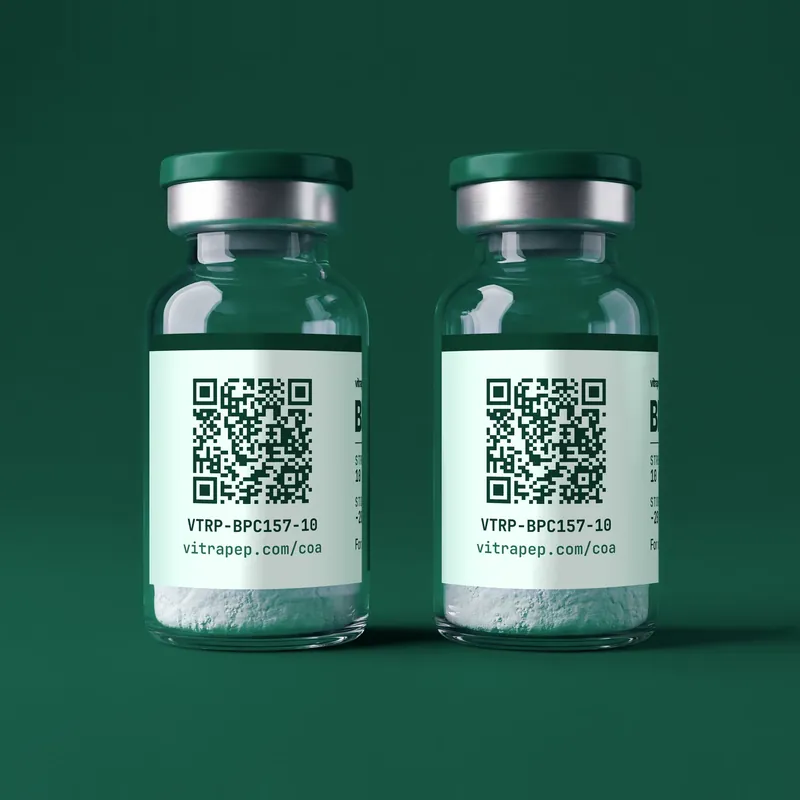
Vitrapep Research Catalog
Research peptides supplied as laboratory reference compounds, each lot with a third-party certificate of analysis. For laboratory research use only, not for human or veterinary use.
Frequently asked questions
Are SARMs peptides?
No. A peptide is a chain of amino acids joined by peptide bonds. A SARM is a small synthetic molecule that binds the androgen receptor. Enobosarm, for example, has a molecular weight of about 389 and contains no amino-acid chain.
Are SARMs legal in the US?
No SARM is FDA-approved, and FDA says products marketed as SARMs are unapproved drugs, not dietary supplements. FDA has sent warning letters to sellers and pursued criminal cases against distributors. SARMs are not on the DEA’s federal controlled substances list as of November 12, 2026. State law may differ.
Are SARMs steroids?
No. They bind the androgen receptor, the same receptor testosterone acts on, but they are non-steroidal. WADA lists them under S1.2, separate from anabolic androgenic steroids in S1.1.
Did the SARMs Control Act pass?
No version we found became law. The 2018 and 2019 Senate bills were each referred to the Judiciary Committee, with no later action recorded.
Are SARMs and peptides banned in sport?
Yes. The WADA 2026 list prohibits SARMs under S1.2, peptide hormones and related substances under S2, and non-approved substances such as BPC-157 under S0, all at all times.
What to know now
- Different molecules: peptides are amino-acid chains; SARMs are small non-steroidal molecules. A SARM is not a peptide.
- Different receptors: many peptides act at cell-surface receptors; SARMs target the androgen receptor.
- FDA: no SARM is approved, and FDA calls marketed SARM products unapproved drugs, not supplements.
- DEA: SARMs are not on the federal controlled substances list; 2018 and 2019 bills to schedule them did not advance.
- Peptides: some are approved drugs; research peptides sold for lab use are not.
- Sport: WADA bans both, under S1.2 for SARMs and S2 or S0 for peptides.
What we’re watching
WADA’s 2027 Prohibited List, which takes effect on January 1, 2027; new editions of the DEA’s controlled substances list, the one cited here being dated November 12, 2026; and any new SARMs bill in Congress.