Tirzepatide side effects reported in clinical trials most often involved the gastrointestinal system. Nausea, diarrhea, vomiting and constipation occurred more often in active-treatment groups than in placebo groups. The percentages varied by study population and trial design.
Quick answer: The most frequently reported tirzepatide side effects are nausea, diarrhea, vomiting, constipation and abdominal discomfort. The U.S. prescribing information also lists fatigue and hair loss among reported adverse reactions. Individual rates depend on the trial and population studied.
What did the tirzepatide trials report?
The clinical trials most often reported gastrointestinal adverse events among participants receiving tirzepatide. The SURMOUNT-1 trial studied adults with obesity or overweight and weight-related conditions, without type 2 diabetes. It randomized 2,539 participants and followed the main study period for 72 weeks. At least one treatment-emergent adverse event was reported by 78.9% to 81.8% of tirzepatide participants. The placebo rate was 72.0% (Jastreboff et al., 2022; ClinicalTrials.gov, NCT04184622).
The most frequently reported events in SURMOUNT-1 were gastrointestinal. The investigators described nausea, diarrhea and constipation as more common in the tirzepatide groups. Most were mild to moderate and appeared mainly during the initial part of the study. The publication also reported serious adverse events in 5.1% to 6.9% of participants across tirzepatide groups and 6.8% in the placebo group. Discontinuation because of adverse events ranged from 4.3% to 7.1% in tirzepatide groups. The placebo rate was 2.6% (Jastreboff et al., 2022).
The SURPASS-2 trial provides a different population. It compared tirzepatide with semaglutide in 1,879 adults with type 2 diabetes receiving background metformin. The most common adverse events were also gastrointestinal. Nausea was reported in 17% to 22% of tirzepatide participants and 18% of semaglutide participants. Diarrhea was reported in 13% to 16% and 12%, respectively. Vomiting was reported in 6% to 10% and 8%, respectively (Frías et al., 2021; ClinicalTrials.gov, NCT03987919).
These studies should not be treated as interchangeable. SURMOUNT-1 enrolled adults with overweight or obesity who did not have type 2 diabetes. SURPASS-2 enrolled adults with type 2 diabetes. Differences in population, comparator and study design affect observed adverse-event rates.
What are the most common tirzepatide side effects?
The current Zepbound prescribing information provides pooled results from two placebo-controlled adult trials for weight reduction and long-term maintenance. The table summarizes reported rates across the active-treatment groups. It does not identify a single universal rate for every participant or every clinical setting (DailyMed, Zepbound prescribing information, updated August 28, 2026).
What are the most common tirzepatide side effects
| Adverse reaction | Tirzepatide groups | Placebo |
|---|---|---|
| Nausea | 25%–29% | 8% |
| Diarrhea | 19%–23% | 8% |
| Vomiting | 8%–13% | 2% |
| Constipation | 11%–17% | 5% |
| Abdominal pain | 9%–10% | 5% |
| Fatigue | 5%–7% | 3% |
| Hair loss | 4%–5% | 1% |
The label's groupings combine related reported terms. For example, the diarrhea category includes frequent bowel movements. The constipation category includes hard stools. Fatigue includes asthenia, lethargy and malaise. The table reflects clinical-trial reporting, not a prediction of what will occur for an individual.
The FDA label also reports gastrointestinal adverse reactions overall in 56% of participants in each active-treatment group, compared with 30% in the placebo group. Gastrointestinal events were the most common reason for treatment discontinuation. The label states that many nausea, vomiting and diarrhea events occurred early in treatment and decreased over time (DailyMed, Zepbound prescribing information).
Does tirzepatide cause hair loss or fatigue?
Hair loss and fatigue were reported in the adult weight-reduction trials included in the Zepbound label. The label reports hair loss in 4% to 5% of active-treatment participants, compared with 1% of placebo participants. It states that hair-loss adverse reactions were associated with weight reduction. The label does not establish that tirzepatide directly causes every reported case (DailyMed, Zepbound prescribing information).
The label reports fatigue-related terms in 5% to 7% of active-treatment participants, compared with 3% of placebo participants. These terms include fatigue, lethargy, asthenia and malaise. The wording matters because a reported adverse reaction is not always proof of a direct cause. Clinical-trial investigators record events that occur during a study, then assess them under the study's reporting rules.
What serious events and discontinuations were reported?
The prescribing information describes several less common events and warnings. In the pooled adult weight-reduction trials, cholelithiasis was reported in 1.1% of Zepbound participants and 1.0% of placebo participants. Cholecystitis was reported in 0.7% and 0.2%, respectively. Acute gallbladder events were associated with weight reduction (DailyMed, Zepbound prescribing information).
The same label reports acute kidney injury in 0.5% of active-treatment participants and 0.2% of placebo participants. It warns that gastrointestinal reactions can contribute to dehydration and kidney problems. It also describes acute pancreatitis as a reported event and includes a warning about symptoms that require medical evaluation. The label reports confirmed acute pancreatitis in 0.2% of participants in both groups in the pooled weight-reduction trials. These figures are trial observations, not evidence that every event was caused by the medicine (DailyMed, Zepbound prescribing information).
Across the two pooled weight-reduction trials, permanent discontinuation because of adverse reactions occurred in 4.8% to 6.7% of tirzepatide participants. The placebo rate was 3.4%. Most discontinuations occurred during the first few months and involved gastrointestinal events. Gastrointestinal reactions led to discontinuation in 1.9% to 4.3% of active-treatment participants. The placebo rate was 0.5% (DailyMed, Zepbound prescribing information).
Who was studied, and what does the FDA label cover?
The evidence includes different patient groups. SURMOUNT-1 enrolled adults with overweight or obesity and without type 2 diabetes. SURPASS-2 enrolled adults with type 2 diabetes. Later maintenance research, including SURMOUNT-4, followed adults with obesity or overweight and assessed outcomes after an initial treatment period (SURMOUNT-4 trial report; ClinicalTrials.gov, NCT04660643).
Tirzepatide is the active ingredient in FDA-approved prescription medicines with specific indications. The Zepbound label covers chronic weight reduction and moderate-to-severe obstructive sleep apnea in adults with obesity. The FDA announced the sleep-apnea indication in December 2024 (FDA, 2024). Mounjaro is a separate tirzepatide product with a diabetes indication and its own prescribing information (DailyMed, Mounjaro prescribing information).
Approved prescription medicines and research materials are not interchangeable categories. The FDA notes that unapproved versions of GLP-1 medicines do not undergo the agency's review for safety, effectiveness and quality before marketing. Its notice also discusses adverse-event reports involving compounded semaglutide and tirzepatide (FDA, concerns with unapproved GLP-1 drugs).
Frequently asked questions
What are the most common tirzepatide side effects?
The current Zepbound label most commonly reports nausea, diarrhea, vomiting and constipation. Abdominal pain, fatigue and hair loss also appear in the adult weight-reduction trial tables.
Does tirzepatide cause hair loss?
Hair loss was reported in 4% to 5% of active-treatment participants and 1% of placebo participants in the pooled adult weight-reduction trials. The label says these reports were associated with weight reduction.
Does tirzepatide make people tired?
Fatigue-related terms were reported in 5% to 7% of active-treatment participants and 3% of placebo participants in the pooled adult weight-reduction trials. The label groups fatigue with asthenia, lethargy and malaise.
Is tirzepatide FDA approved?
Tirzepatide is the active ingredient in approved prescription products, including Zepbound and Mounjaro. Their approved indications and prescribing information are product-specific.
Are tirzepatide side-effect rates the same in every study?
No. Rates vary with the population, comparator, trial length and reporting definitions. The FDA label cautions that adverse-reaction rates from different clinical trials cannot be directly compared.
What to know now
- Gastrointestinal events were the most frequently reported adverse reactions in the major tirzepatide trials.
- The current Zepbound label reports fatigue and hair loss, alongside warnings for gallbladder disease, pancreatitis and kidney injury.
- Tirzepatide has approved prescription uses, but unapproved research materials are not equivalent to FDA-approved medicines.
What we’re watching
- Future FDA label revisions and post-marketing safety updates may change the adverse-reaction information available for tirzepatide products.
- Ongoing and completed tirzepatide trials may add evidence from populations not represented in the original obesity studies. No specific future safety readout date is asserted here.
Vitrapep research material
Vitrapep sells tirzepatide for laboratory research use only. It is not for human or veterinary use. The tirzepatide research guide and where-to-buy information provide related site information.
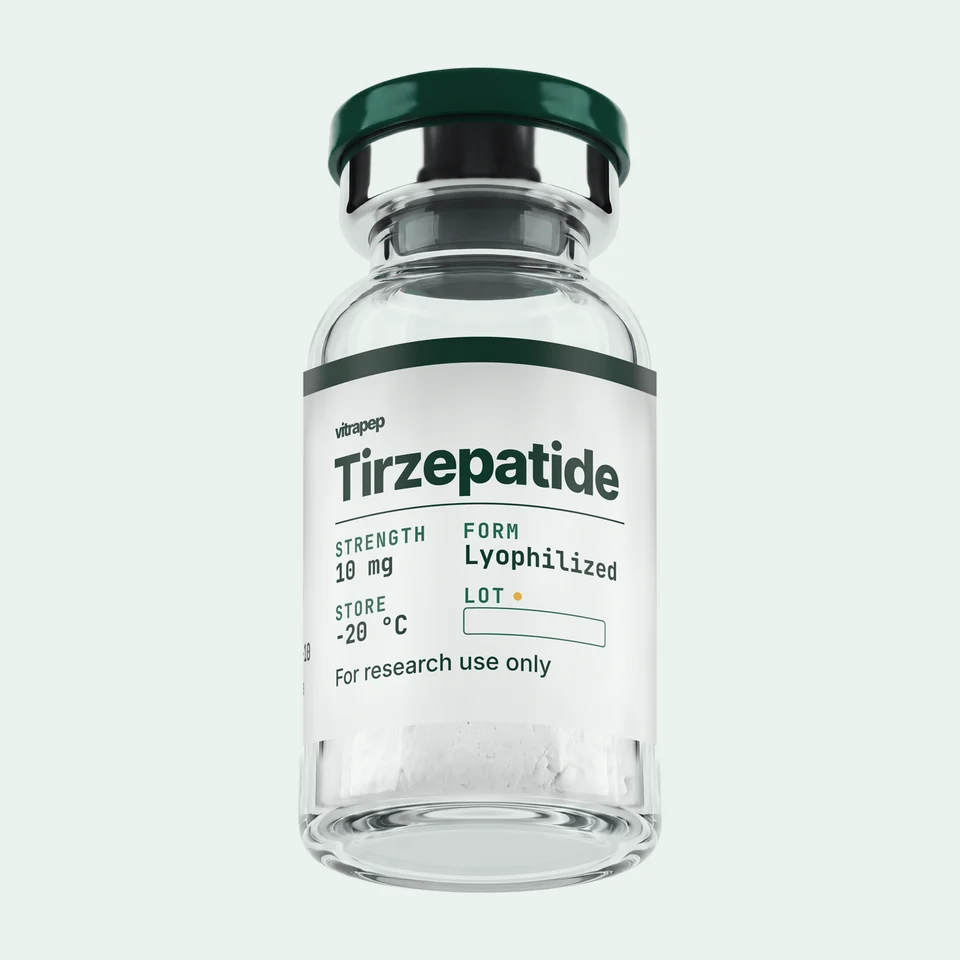
Tirzepatide
Specifications for the tirzepatide sold for laboratory research. COA available with each lot.