GHK-Cu side effects are not yet mapped in large clinical trials. Small topical studies provide an early tolerability signal, while the U.S. Food and Drug Administration (FDA) has highlighted specific concerns about compounded injectable GHK-Cu. The distinction between topical cosmetic research and systemic exposure is essential.
Quick answer: GHK-Cu side effects have not been quantified reliably in large human trials. Topical studies have reported limited safety concerns, but small sample sizes cannot rule out uncommon reactions. Injectable GHK-Cu has a much weaker human evidence base, and FDA has identified quality-related immunogenicity concerns for compounded injectable products.
What GHK-Cu side effects have topical studies reported?
GHK-Cu is a copper-binding tripeptide made from glycine, histidine and lysine. It is also called glycyl-L-histidyl-L-lysine copper. Researchers have studied its roles in skin biology, extracellular matrix activity, inflammation and wound models.
The compound is often discussed in two different contexts. Topical GHK-Cu appears in cosmetic formulations. Research-grade material is also studied in laboratory and preclinical settings. These categories are not interchangeable. A product formulated for cosmetic use does not automatically have the quality attributes needed for systemic drug exposure.
This difference matters when reviewing side effects. A reaction observed with a topical serum cannot be assumed to predict the safety of an injectable preparation. Likewise, safety observations from one formulation may not apply to another formulation with different purity, copper occupancy, impurities or excipients.
What side effects have topical studies reported?
The topical evidence is encouraging but small. A randomized controlled trial by Miller and colleagues evaluated skin-care products containing a copper tripeptide complex after carbon dioxide laser resurfacing. Thirteen participants completed the study. The researchers found no objective advantage for redness resolution or measured wrinkle improvement. The publication did not establish a precise incidence rate for GHK-Cu-related irritation or allergy.
A 2026 randomized, double-blind, vehicle-controlled split-face study evaluated a topical GHK-Cu serum in 18 healthy participants with eyebrow thinning. The authors reported improvements in hair count and diameter on the treated side. They reported no serious adverse effects or allergic reactions during the 12-week observation period. This is a useful early tolerability signal, but the sample was too small to detect rare reactions.
The American Academy of Dermatology notes that copper peptide products may cause erythema, burning, irritation or irritant dermatitis, particularly when combined with several active skin-care ingredients. This is general dermatology guidance, not an incidence estimate from a GHK-Cu-specific controlled trial.
The overall picture is cautiously positive for studied topical cosmetic formulations. However, the clinical record does not support a claim that every GHK-Cu product is irritation-free or suitable for every skin type.
What is known about injectable GHK-Cu safety?
The human evidence for injectable GHK-Cu is substantially thinner than the topical literature. The FDA lists GHK-Cu for injectable routes among bulk drug substances that may present significant safety risks in compounding. The agency states that compounded injectable drugs containing GHK-Cu may pose immunogenicity risks because of potential aggregation and peptide-related impurities. FDA also says there are limited human data to inform safety considerations.
Immunogenicity means that a substance or impurity may trigger an immune response. Peptide aggregation can complicate quality control because aggregates may behave differently from the intended molecular form. Peptide-related impurities can also affect the identity and consistency of a preparation.
These FDA concerns apply to compounded injectable products. They should not be inaccurately presented as proof that topical GHK-Cu causes systemic immune reactions. They also do not prove that every injectable preparation will cause harm. They identify unresolved risks that require better characterization and safety evidence.
What do the studies show?
What do the studies show
| Study or source | Model and size | Safety information | Evidence type |
|---|---|---|---|
| Miller et al., 2006 | Randomized post-laser skin study; 13 completers | No reliable adverse-event frequency reported in the abstract; no objective efficacy difference | Human topical |
| Bo et al., 2026 | Randomized split-face eyebrow study; 18 healthy adults | No serious adverse effects or allergic reactions reported | Human topical |
| American Academy of Dermatology | Clinical dermatology guidance | Notes possible erythema, burning, irritation and dermatitis with copper peptide products | Clinical guidance |
| FDA compounding safety review | Review of injectable GHK-Cu nominations | Flags potential immunogenicity from aggregation and peptide-related impurities; human data limited | Regulatory assessment |
The most useful conclusion is about evidence boundaries. Topical research has begun to document tolerability, but it remains based on small studies. Injectable GHK-Cu has not developed a comparable controlled human safety record.
Is GHK-Cu FDA-approved?
GHK-Cu is used as a cosmetic ingredient in topical products. That does not mean FDA has approved it as a drug to treat a disease or injury. FDA has not approved GHK-Cu as a therapeutic drug. The agency's compounding review specifically highlights unresolved safety questions for injectable formulations.
Vitrapep's research library classifies GHK-Cu as cosmetic/topical, while its product page lists a lyophilized research material. Those descriptions should remain distinct. The existence of a topical cosmetic ingredient does not establish approval or suitability for systemic use.
Product and research information
Vitrapep sells GHK-Cu for laboratory research use only. It is not for human or veterinary use. See the GHK-Cu product page, GHK-Cu complete guide, GHK-Cu collagen mechanism and GHK-Cu skin-aging research.
FAQ
What are the most commonly reported GHK-Cu side effects?
The small topical clinical record does not establish a reliable frequency. Dermatology guidance notes possible redness, burning, irritation and irritant dermatitis with copper peptide products.
Did human trials report allergic reactions?
An 18-participant topical study published in 2026 reported no allergic reactions. That sample cannot exclude uncommon reactions or establish broad safety.
Is injectable GHK-Cu safe?
The available human evidence is inadequate to establish injectable safety. FDA has raised concerns about possible immunogenicity from aggregation and peptide-related impurities.
Are topical and injectable GHK-Cu studies interchangeable?
No. Formulation, exposure route, purity, impurities and local tissue exposure differ. Topical findings cannot establish systemic safety.
Is GHK-Cu an FDA-approved medicine?
No. GHK-Cu is used as a topical cosmetic ingredient, but FDA has not approved it as a therapeutic drug.
What to know now
- Small topical studies provide an early tolerability signal, but they do not establish rare-event rates.
- Dermatology guidance identifies possible local irritation, redness, burning and dermatitis.
- FDA has identified specific quality and immunogenicity concerns for compounded injectable GHK-Cu.
What we’re watching
- Results from the registered Phase 2 topical GHK-Cu wound study, NCT07437586, once reported.
- Larger controlled topical trials with chemically characterized formulations and clearer adverse-event reporting.
- Better human safety data that distinguish topical cosmetic exposure from systemic exposure.
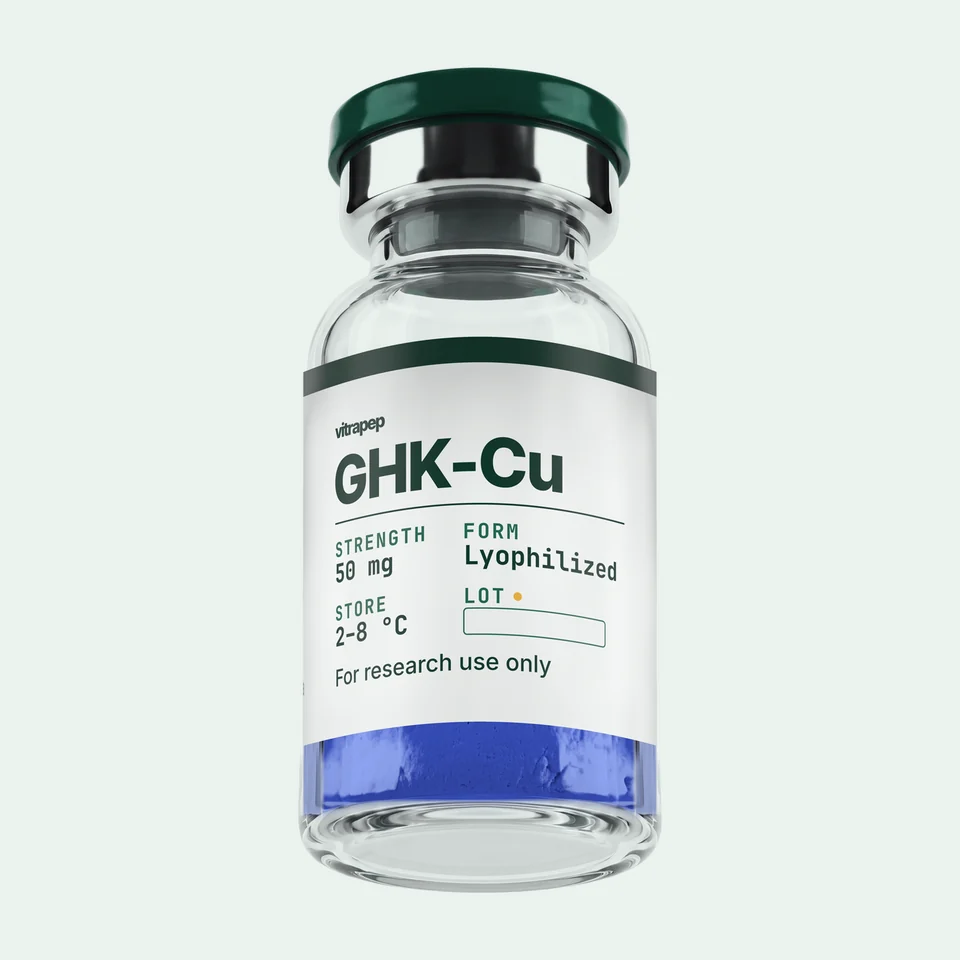
GHK-Cu product page
Specifications for the GHK-Cu product page sold for laboratory research. COA available with each lot.