Peptide prices look chaotic from the outside. On November 17, 2026, US research suppliers listed 10 mg tesamorelin vials at anywhere from $35.00 to $120.00, more than a threefold gap for the same labeled amount. GHK-Cu sells in 50 mg vials for less than a 5 mg vial of MOTS-c. We’ll cover the four synthesis variables that explain almost all of it, and why prices far below the rest of the market are a question rather than a bargain.
Quick answer: Research peptide prices reflect synthesis complexity: sequence length, chemical modifications, purification and testing. On November 17, 2026, US research suppliers listed retatrutide at $4.00–$10.50 per mg, semaglutide at $3.67–$12.00 per mg and tesamorelin at $3.50–$12.00 per mg. Larger vials usually cost less per mg. A price far below other listings for the same compound is a reason to ask whether the supplier skipped purification or third-party testing. It is unlikely to mean they discovered a synthesis miracle.
This article is the cost-math companion to our buyer’s guide. That piece answers “how do I evaluate a vendor.” This one answers “how do I evaluate a price.” The same documentation chain that proves a peptide is what the label claims is the cost the vendor has to recover in the per-vial price.
Research-grade prices at US suppliers, checked November 17, 2026
| Compound | 10 mg vial, listed price | Price per mg, all sizes listed | Full table |
|---|---|---|---|
| Retatrutide | $80.00–$105.00 | $4.00–$10.50 | Retatrutide price |
| Semaglutide | $59.99–$64.99 | $3.67–$12.00 | Semaglutide price |
| Tesamorelin | $35.00–$120.00 | $3.50–$12.00 | Tesamorelin price |
Source: supplier product pages read November 17, 2026, listed on each price page. Single-vial list prices before shipping, codes and pack discounts. Price per mg is the listed price divided by the vial size. Vitrapep’s own prices are not included in these ranges; each price page lists them.
The four levers that drive peptide pricing
Almost all the variance in peptide retail prices traces to four variables, every one rooted in how the molecule is physically built. None of them are marketing decisions. They’re consequences of the chemistry described in the industrial SPPS literature (Verlander, 2007).
1. Sequence length — each amino acid is one more cycle
Solid-phase peptide synthesis (SPPS) builds a peptide one residue at a time on a polystyrene bead. Each cycle deprotects, couples a new amino acid, and washes. GHK-Cu needs 3 cycles. BPC-157 needs 15. Tirzepatide needs 39.
Each cycle hits roughly 98–99.5% coupling efficiency. A 5-residue peptide retains about 95% of starting material. A 40-residue peptide at the same per-cycle efficiency keeps only 67%. The longer peptide isn’t just 8× the cycles. It’s a messier crude mixture that costs more HPLC time to clean up. That’s why long peptides cost more per mg to make than short ones.
2. Chemical modifications — specialty chemistry adds specialty cost
Standard SPPS handles the 20 normal L-amino acids efficiently. Anything beyond that costs more:
- D-amino acids. SS-31 contains D-arginine. D-residues provide protease resistance but cost 3–10× the equivalent L-residue.
- Lipidation. Tirzepatide has a fatty-acid side chain at lysine-20; retatrutide has a similar long-chain modification. These extend half-life through albumin binding but add on-resin acylation and extra purification.
- PEGylation. PEG attachment extends half-life but requires conjugation chemistry and characterization separate from the synthesis itself.
- Unnatural residues. Aib (aminoisobutyric acid) appears in semaglutide for protease resistance. Non-canonical amino acids cost more than the natural set.
- Cyclization. Disulfide bridges, head-to-tail cyclization, or side-chain stapling all add steps after the linear sequence is built.
Tesamorelin is the textbook case. The 44-residue GHRH(1-44) backbone is long but standard SPPS handles it. The N-terminal trans-3-hexenoyl modification is what turns it into tesamorelin (rather than sermorelin), and what makes it meaningfully more expensive per mg.
3. Purification rigor — 95% vs 99% is mostly column time
The 2026 working standard for research-grade peptide purity is ≥98% HPLC. Leading suppliers reach 99%+ (Verlander, 2007). Tightening the preparative HPLC collection window from 95% to 99% means rejecting more borderline fractions and cutting yield by 10–30%. Cost-per-mg goes up accordingly.
This is the lever behind most price gaps between vendors selling “the same” peptide. Two suppliers can buy crude peptide from the same contract manufacturer. One purifies to 95% and sells for less. The other purifies to 99% with a documented chromatogram and charges more. The synthesis source is identical. The purification depth differs. The cheaper vial isn’t actually the same product. It has a different impurity profile.
4. Documentation overhead — third-party testing is a real cost
A research-grade CoA from an ISO/IEC 17025–accredited third-party lab costs the supplier $150–$400 per lot for HPLC + mass-spec identity + water content. Bacterial endotoxin testing (USP <85> LAL) adds another $80–$200 per lot when included. Storage stability data, serialized lot traceability, and the quality system to maintain all of this are ongoing costs. Small at the per-vial level, but real. And zero for vendors who skip them.
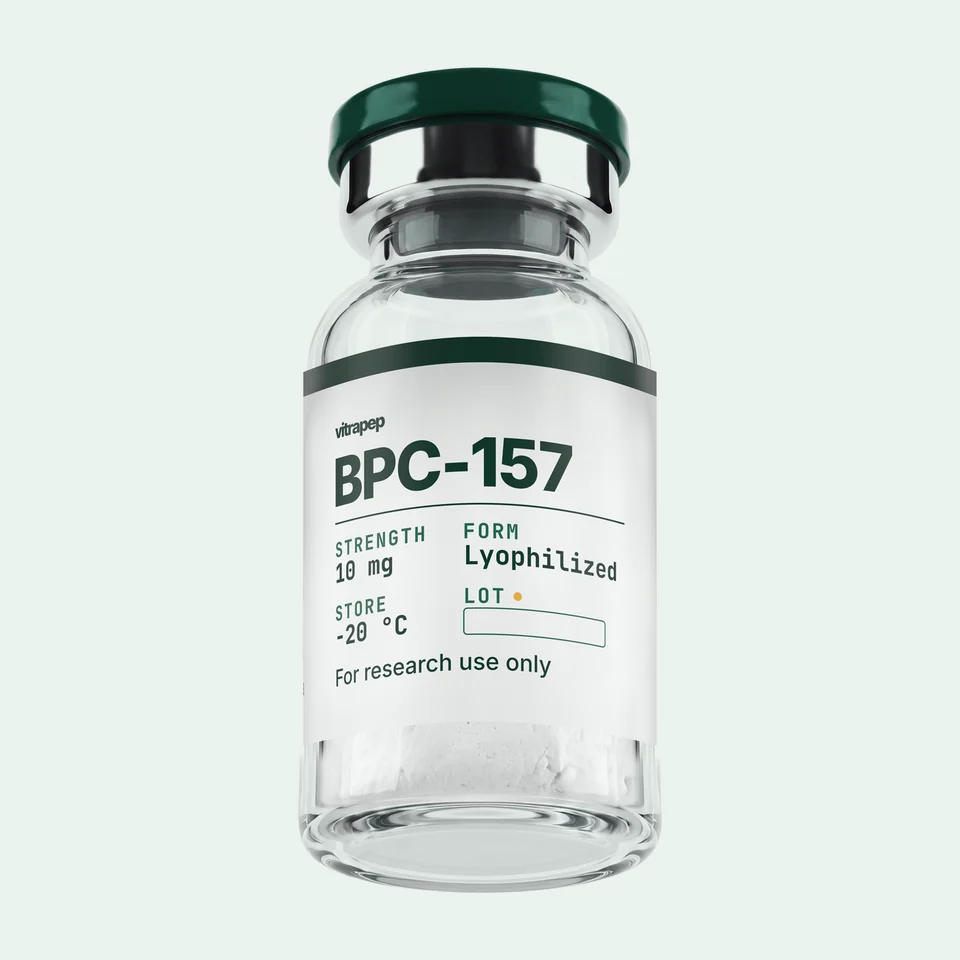
BPC-157
The 15-residue gastric pentadecapeptide cited across the 2025 BPC-157 literature review and the 2025 HSS Journal systematic review. Lab-verified identity, third-party CoA on every lot, priced to reflect synthesis and documentation cost rather than race-to-the-bottom shortcuts.
Why cheap is suspicious — the synthesis-cost floor
Synthesis, purification and third-party testing all cost money. A supplier priced far below everyone else may have skipped one of them. What was skipped decides whether the molecule in the vial is what the label claims.
Two signals worth checking:
- A price far below other listings for the same compound and vial size. Moderate gaps are normal. A vial priced at a small fraction of the rest of the market leaves little room for purification and testing.
- Packs priced far below single vials. On November 17, 2026, one US listing offered a 10-vial retatrutide pack for $189.00, or $18.90 a vial. Single 10 mg vials listed at $80.00 to $105.00 elsewhere that day (retatrutide price).
Rule of thumb: Compare a listing with other listings for the same compound and vial size, checked on the same day. If it sits far below the rest, ask for the lot’s certificate before ordering. The vial may still arrive. The question is whether the molecule in it is what the label claims.
Why prices vary between reputable vendors
Prices for the same peptide vary widely. On November 17, 2026, US research suppliers listed 10 mg tesamorelin vials from $35.00 to $120.00 and 10 mg retatrutide vials from $80.00 to $105.00 (tesamorelin price, retatrutide price). Much of the variation tracks four legitimate cost-stack differences:
- Synthesis source. Vendors buying crude peptide from established U.S. contract manufacturers (Bachem, AmbioPharm, PolyPeptide) pay more than vendors sourcing from smaller Asian manufacturers. Quality is more consistent at the established shops, and wholesale cost reflects that.
- Purification depth. A vendor consistently delivering 99.5%+ purity carries roughly 15–25% more cost per mg than one delivering 98%.
- Third-party testing thoroughness. Per-lot external testing costs more than batch sampling (one external CoA per 5–10 lots) with internal QC on the rest. The first approach produces granular traceability. The second is cheaper.
- Operational overhead. U.S. fulfillment, named lab partners, published return policy, real customer service, a warehouse with proper storage, lot traceability back to the buyer — all real operating costs. Re-shippers drop-shipping from an Asian manufacturer carry almost none of these. The difference shows up in the buyer experience, not the molecule: missing orders, slow shipping, no recourse when a lot tests out of spec.
A moderate gap between reputable suppliers usually maps to one of these four. A listing at a small fraction of everyone else’s price is harder to explain that way.
The Vitrapep catalog
The full Vitrapep catalog. Every lot ships with a batch-matched third-party CoA. COAs available before purchase on request — the synthesis-cost floor is not a marketing claim.
Frequently asked questions about peptide prices
How much do peptides cost?
It depends on the compound, the vial size and the supplier. On November 17, 2026, US research suppliers listed retatrutide at $4.00–$10.50 per mg, semaglutide at $3.67–$12.00 per mg and tesamorelin at $3.50–$12.00 per mg. Larger vials usually cost less per mg. Our retatrutide, semaglutide and tesamorelin price pages have the full tables.
Why is tirzepatide so expensive?
Tirzepatide is a 39-residue peptide with a fatty-acid side-chain modification at lysine-20. Thirty-nine SPPS coupling cycles, specialized lipidation chemistry, and the purification needed to clean up a longer crude mixture all raise its cost per mg compared with an unmodified 15-residue peptide like BPC-157.
Are cheap peptides safe?
Cheap peptides should prompt identity questions, not bargain enthusiasm. A vial priced far below other listings for the same compound may have skipped purification, third-party testing, or both. The compound in the vial may not be what the label claims: underdosed, a different peptide entirely, or substantially impure. Safety isn’t the right framing. Identity is. Without third-party testing, you don’t know what’s in the vial.
What’s the cheapest peptide?
GHK-Cu, a copper-bound tripeptide, is the cheapest research peptide per mg. It’s short, the synthesis is mature thanks to decades of cosmetic-scale production, and it’s sold in larger vials (50 mg). Short cognitive peptides like Selank, Semax, and DSIP are next-cheapest. They’re heptapeptides or nonapeptides that need only 7–9 cycles.
Why do prices vary so much between vendors?
Variation tracks four cost-stack differences: synthesis source (U.S. contract manufacturers cost more than smaller Asian sources), purification depth, third-party testing thoroughness, and operational overhead (U.S. fulfillment, named lab partners, real customer service, lot traceability). A moderate gap between two reputable suppliers usually maps to one of these. A listing at a small fraction of everyone else’s price is harder to explain that way, and may mean one supplier skipped purification or testing.
What to know now
- Four levers drive every peptide price. Sequence length, chemical modifications, purification depth, and documentation overhead. Memorise these and most pricing decisions become obvious.
- Very cheap listings deserve a closer look. A price far below other listings for the same compound can mean skipped purification or testing. Ask for the lot’s certificate.
- Check current listings, not old benchmarks. On November 17, 2026, US research suppliers listed 10 mg retatrutide vials at $80.00–$105.00 and 10 mg tesamorelin vials at $35.00–$120.00.
- Moderate price gaps between reputable suppliers are normal. They usually reflect different cost stacks. A listing at a small fraction of everyone else’s price does not.
- The CoA is what justifies the price. A vendor who can’t produce a lot-specific Certificate of Analysis isn’t cheap — they’re just missing the documentation that proves the molecule is the molecule. That’s a different question from price.
What we’re watching
Three pricing developments worth tracking in 2026 and beyond. First, research-grade prices in the GLP-1 class as patents on tirzepatide and retatrutide age and contract manufacturers scale up production. We re-check listings on our retatrutide, semaglutide and tesamorelin price pages as they change. Second, the emergence of small-molecule oral GLP-1 receptor agonists (orforglipron from Eli Lilly, danuglipron from Pfizer in earlier development) that will compete with injectable peptides at potentially different unit-economics — not directly comparable to per-mg peptide pricing, but a market force. Third, the ongoing tightening of FDA enforcement against grey-market “research peptide” sites making clinical claims, which is gradually clearing out the bottom of the cost-floor cellar — the vendors selling BPC-157 with dosing instructions for human use have been receiving warning letters at an increasing rate, and that’s a net positive for the market.