A peptide price list is only useful if it says what each number means. This one lists every research peptide Vitrapep sells, with its vial size, its price and its price per mg, next to the range we found at other US research suppliers. Prices are as of November 17, 2026. Every product here is for laboratory research use only, not for human or veterinary use.
Quick answer: Research peptide prices vary far more per mg than per vial. In our November 17, 2026 check, short peptides such as GHK-Cu and Semax listed for about $0.35–$2.52 per mg at US suppliers, while longer or modified peptides such as retatrutide and tesamorelin listed for about $3.50–$12.00 per mg. Table 1 gives Vitrapep’s price for each product and the range we found elsewhere.
How this list was built
- Vitrapep prices come from the store’s catalog on November 17, 2026. Each product gets one row. Two-vial bundles are left out, and bacteriostatic water is listed separately in Table 2.
- Price per mg is the listed price divided by the vial size, rounded to the cent. For blends, it uses the total mg in the vial.
- Supplier ranges show the lowest and highest price per mg we found on US research supplier pages that day, across all vial sizes listed. We filled a range only when we confirmed listings at three or more suppliers. Otherwise the cell says “not checked.” We did not estimate any cell.
- What is excluded: shipping, discount codes, multi-vial pricing, and products in other forms, such as sprays, tablets or serums.
Research peptide price list, November 2026
Vitrapep research peptide prices and US supplier ranges per mg, prices as of November 17, 2026
| Product | Vial size | Vitrapep price | Vitrapep per mg | Other US suppliers, per mg |
|---|---|---|---|---|
| 5-Amino-1MQ | 5 mg | $56.99 | $11.40 | $0.70–$7.00 |
| AOD-9604 | 5 mg / 10 mg | $94.99 / $154.99 | $19.00 / $15.50 | $6.00–$8.80 |
| BPC-157 | 10 mg | $69.99 | $7.00 | $2.50–$12.00 |
| BPC-157 + TB-500 Blend | 20 mg | $124.99 | $6.25 | $2.75–$11.50 |
| Cartalax | 20 mg | $84.99 | $4.25 | not checked |
| CJC-1295 (no DAC) | 10 mg | $90.99 | $9.10 | $4.00–$9.20 |
| CJC-1295 / Ipamorelin Blend | 10 mg | $84.99 | $8.50 | $4.50–$8.40 |
| Cortagen | 20 mg | $84.99 | $4.25 | not checked |
| DSIP | 10 mg | $69.99 | $7.00 | $3.00–$8.80 |
| Epithalon | 10 mg | $56.99 | $5.70 | $2.00–$3.76 |
| Fragment 176-191 | 5 mg / 10 mg | $99.99 / $159.99 | $20.00 / $16.00 | not checked |
| GHK-Cu | 50 mg | $60.99 | $1.22 | $0.35–$1.28 |
| GHRP-2 | 5 mg / 10 mg | $39.99 / $54.99 | $8.00 / $5.50 | $2.90–$6.00 |
| GHRP-6 | 5 mg / 10 mg | $39.99 / $54.99 | $8.00 / $5.50 | $2.90–$6.00 |
| GLOW Blend | 70 mg | $114.99 | $1.64 | $0.86–$2.93 |
| Glutathione | 1,500 mg | $84.99 | $0.06 | $0.05–$0.13 |
| Ipamorelin | 10 mg | $73.99 | $7.40 | $2.50–$9.20 |
| KLOW Blend | 80 mg | $172.99 | $2.16 | $0.94–$2.75 |
| KPV | 10 mg | $79.99 | $8.00 | $2.00–$9.75 |
| MOTS-c | 10 mg | $65.99 | $6.60 | $1.13–$11.60 |
| NAD+ | 500 mg | $74.99 | $0.15 | $0.07–$0.30 |
| Pinealon | 20 mg | $84.99 | $4.25 | $3.25–$3.75 |
| Prostamax | 20 mg | $84.99 | $4.25 | not checked |
| Retatrutide | 10 mg | $99.99 | $10.00 | $4.00–$10.50 |
| Selank | 10 mg | $61.99 | $6.20 | $2.50–$5.20 |
| Semaglutide | 15 mg | $79.99 | $5.33 | $3.67–$12.00 |
| Semax | 10 mg | $67.99 | $6.80 | $2.12–$2.52 |
| SS-31 | 10 mg | $90.99 | $9.10 | $1.60–$7.00 |
| TB-500 | 10 mg | $74.99 | $7.50 | not checked |
| Tesamorelin | 5 mg | $69.99 | $14.00 | $3.50–$12.00 |
| Testagen | 20 mg | $84.99 | $4.25 | not checked |
| Thymalin | 10 mg / 20 mg | $69.99 / $114.99 | $7.00 / $5.75 | $4.56–$5.52 |
| Thymogen | 20 mg | $84.99 | $4.25 | not checked |
| Thymosin Beta-4 | 5 mg / 10 mg | $74.99 / $114.99 | $15.00 / $11.50 | $6.80–$15.60 |
| Thymulin | 5 mg / 10 mg | $49.99 / $69.99 | $10.00 / $7.00 | not checked |
| Tirzepatide | 10 mg | $74.99 | $7.50 | $2.17–$10.00 |
| Vesugen | 20 mg | $84.99 | $4.25 | not checked |
| Vilon | 20 mg | $84.99 | $4.25 | $3.00–$3.70 |
Sources: Vitrapep catalog, November 17, 2026; supplier product and catalog pages listed in the references, read the same day. “Other US suppliers” is the lowest to highest listed price per mg we found, across every vial size listed, so it includes larger vials that cost less per mg. The retatrutide, semaglutide, tirzepatide and tesamorelin ranges come from the same-day checks on their price pages, linked below, where each supplier is listed. “Not checked” means we did not confirm listings at three or more US suppliers. For TB-500, most listings with that name that we checked described full-length thymosin beta-4, a 43-residue peptide, while Vitrapep’s TB-500 is the seven-residue fragment Ac-LKKTETQ, so we did not compare them. Listings that describe full-length thymosin beta-4 are counted in the Thymosin Beta-4 row. NAD+ and 5-Amino-1MQ are not peptides. All products are for laboratory research use only, not for human or veterinary use.
Of the 29 products with a supplier range, Vitrapep’s price per mg falls inside the range for 16 and above it for 11. For GHRP-2 and GHRP-6, the 10 mg vial falls inside the range and the 5 mg vial above it. The widest spreads were for BPC-157, at $2.50 to $12.00 per mg, and MOTS-c, at $1.13 to $11.60.
Bacteriostatic water
Bacteriostatic water is a laboratory consumable, not a peptide, so it is listed on its own. The three supplier listings we compared each described sterile water with 0.9% benzyl alcohol. Our article on bacteriostatic water explains what it is.
Bacteriostatic water price, as of November 17, 2026
| Product | Size | Vitrapep price | Vitrapep per mL | Other US suppliers, per mL |
|---|---|---|---|---|
| Bacteriostatic Water | 10 mL | $24.99 | $2.50 | $0.83–$1.50 |
Sources: Vitrapep catalog; MyPurePeptide (10 mL, $15.00), PS Peptides (10 mL, $14.99 sale, $19.99 regular) and Purely Peptides (30 mL, $24.99), read November 17, 2026. Price per mL is the listed price divided by the volume.
What drives cost per mg
The same few factors explain most of the spread in Table 1. Our peptide prices explainer covers each one in more depth.
- Sequence length. Peptides are built one amino acid at a time by solid-phase synthesis. Every added residue is another coupling step with its own yield loss, so long sequences cost more per mg than short ones (Verlander, 2007). Three-residue GHK-Cu sits at the low end of Table 1.
- Modifications. Some peptides carry added chemistry. Tirzepatide is a 39-residue peptide with a C20 fatty diacid attached through a linker (Coskun et al., 2018), and retatrutide carries a fatty diacid on a lysine residue (Li et al., 2024). Each modification adds synthesis and purification steps.
- Purity. Raising HPLC purity means discarding more of each batch during purification, so higher purity costs more per mg delivered. See peptide purity and HPLC.
- Testing. Identity by mass spectrometry and purity by HPLC at an outside laboratory is a cost for every lot. Laboratories accredited to ISO/IEC 17025 have been assessed for testing competence. Our guide to reading a certificate of analysis shows what a lot report should include.
- Vial size. Filling, labeling and testing cost about the same per vial whatever it holds, so larger vials cost less per mg. That is why ranges that include 30 mg to 50 mg vials start low.
Compound price guides
Six products have their own price page, with every supplier listing, vial size and source:
For the semaglutide, tirzepatide and tesamorelin pages, approved prescription medicines and research-grade vials are separate categories. A research vial is not an alternative to a prescription medicine.
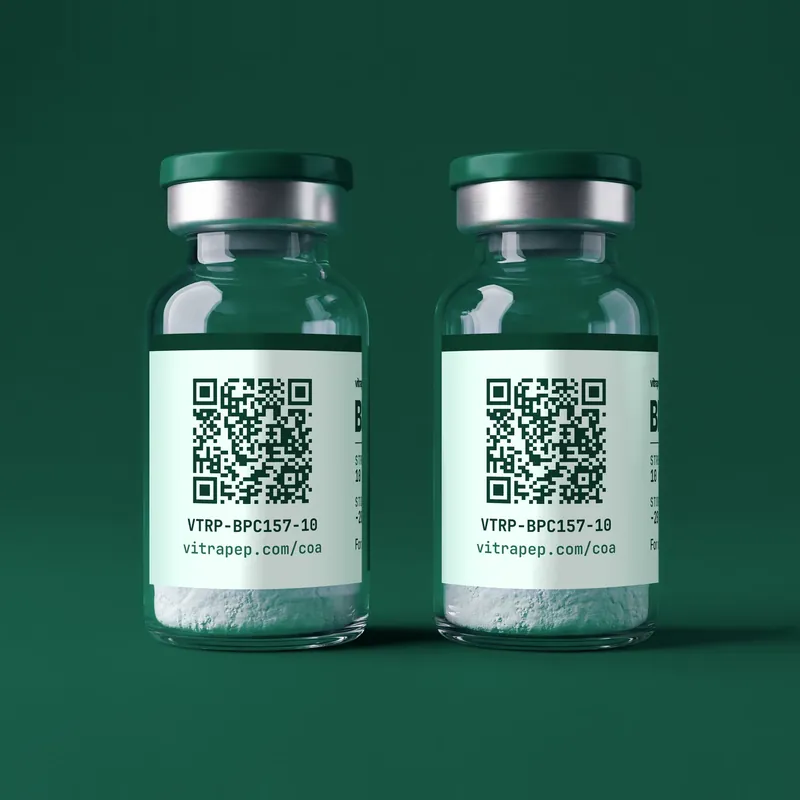
Vitrapep Research Catalog
Research peptides supplied as laboratory reference compounds, each lot with a third-party certificate of analysis. For laboratory research use only, not for human or veterinary use.
Frequently asked questions about peptide prices
How much do research peptides cost in 2026?
Per vial, the Vitrapep products in Table 1 run from $39.99 to $172.99 as of November 17, 2026. Per mg, they run from $0.06 to $20.00. At other US research suppliers, per-mg prices for the same compounds ran from a few cents to $15.60.
Why compare price per mg instead of price per vial?
Vial sizes differ between suppliers. MOTS-c, for example, was listed in 10 mg, 40 mg and 50 mg vials in our check. Price per mg puts them on one scale. Compare the same compound, and check purity and testing too.
Why does one peptide cost more per mg than another?
Mostly sequence length, chemical modifications, purity and testing. Long or lipidated peptides take more synthesis and purification steps than short ones.
What does “not checked” mean in the table?
It means we did not confirm listings at three or more US research suppliers for that product on November 17, 2026. We left the cell empty of numbers rather than estimate.
Will these prices change?
Yes. Supplier promotions change often, and Vitrapep’s prices may still change before launch. Each row is dated to November 17, 2026.
What to know now
- Prices as of November 17, 2026. 38 Vitrapep products, $39.99 to $172.99 per vial.
- Per mg is the fair comparison. Vitrapep’s range runs from $0.06 to $20.00 per mg.
- 29 products checked against other suppliers. Vitrapep is inside the range for 16 and above it for 11.
- Length and modifications drive cost. Short peptides cost less per mg than long or lipidated ones.
- Research use only. Every product is for laboratory research, not for human or veterinary use.
What we’re watching
Supplier pricing moves with promotions, new vial sizes and stock. We will re-check the ranges in Table 1, try to fill the “not checked” rows, and update the date stamp when we do. Vitrapep’s own prices may also change before launch.