CJC 1295 side effects are difficult to characterize because the human evidence is limited. The available clinical studies primarily examined CJC-1295 with drug affinity complex (DAC). They do not establish the safety of every product marketed under the CJC-1295 name.
Quick answer: CJC-1295 side effects reported in human studies include injection-site reactions, headache, flushing and gastrointestinal symptoms. FDA has identified serious adverse events involving increased heart rate and systemic vasodilatory reactions. The clinical database is limited.
What side effects were reported in human CJC-1295 trials?
The principal published controlled human study evaluated CJC-1295 in healthy adults. Researchers reported no serious adverse reactions in that study. However, the FDA's later review describes several adverse events across the available clinical evidence.
FDA summarized injection-site irritation, redness, firmness, pain and itching. It also reported transient urticarial rashes, headache, diarrhea, nausea and abdominal pain.
Other reported events included flushing, dizziness, hypotension and transient involuntary leg muscle contractions. One report described temporary loss of coordination.
These findings relate mainly to CJC-1295 DAC. They should not be treated as a complete safety profile for every CJC-1295 form or formulation.
What did the CJC-1295 clinical trial find?
Teichman and colleagues published a randomized, placebo-controlled study in healthy adults. The study examined pharmacokinetics, hormone responses and safety.
The researchers reported no serious adverse reactions. The publication described CJC-1295 as generally well tolerated within the study conditions.
That result does not establish long-term safety. The study was limited in size and duration. It also does not resolve safety questions about other chemical forms, salts or products.
Read the published clinical study.
What cardiovascular effects have been reported?
FDA identified increased heart rate and systemic vasodilatory reactions among serious adverse events associated with CJC-1295. Systemic vasodilatory reactions can involve flushing, warmth and changes in blood pressure.
The FDA briefing also describes transient hypotension and dizziness in the available clinical reports. These findings are important because cardiovascular responses can vary between individuals.
The evidence remains limited. FDA has stated that the available clinical data do not provide a comprehensive safety characterization.
See the FDA CJC-1295 briefing document.
Are CJC-1295 side effects different with DAC and without DAC?
CJC-1295 names are used for different substances. The DAC form includes a drug affinity complex intended to extend activity.
The published controlled human evidence primarily concerns CJC-1295 DAC. FDA noted uncertainty about the exact substance used in some reports. It found no clinical safety information for several other nominated forms.
This distinction matters. Findings from CJC-1295 DAC cannot automatically be applied to CJC-1295 without DAC. The available evidence does not establish that the forms have identical safety profiles.
What does the FDA say about CJC-1295 safety?
FDA has identified potential risks involving immunogenicity, peptide-related impurities and challenges in characterizing the active substance. The agency also identified serious adverse events involving increased heart rate and systemic vasodilatory reactions.
FDA's compounding review is not an approval decision. It evaluates safety concerns related to nominated bulk drug substances and compounding.
CJC-1295 is not an FDA-approved medicine. A research-use label does not establish that a product is approved or suitable for human use.
The FDA's current safety page lists CJC-1295 among bulk drug substances that may present significant safety risks. Read the FDA safety summary.
What are the main limitations of the safety evidence?
The human evidence base is small. Published trials do not establish the frequency of uncommon events or the effects of long-term exposure.
There is also uncertainty about the precise form used in some reports. Product identity, purity, aggregation and peptide-related impurities create additional questions.
The FDA has emphasized that different CJC-1295-related substances should be evaluated separately. Safety findings from one form should not be generalized to all products.
For more background, see Vitrapep’s CJC-1295 complete guide, CJC-1295 DAC vs no DAC comparison, CJC-1295 mechanism article and CJC-1295 + ipamorelin blend side effects. For why there is no approved dose, see why research peptides have no dose.
Vitrapep research material
Vitrapep sells CJC-1295 for laboratory research use only. It is not for human or veterinary use.
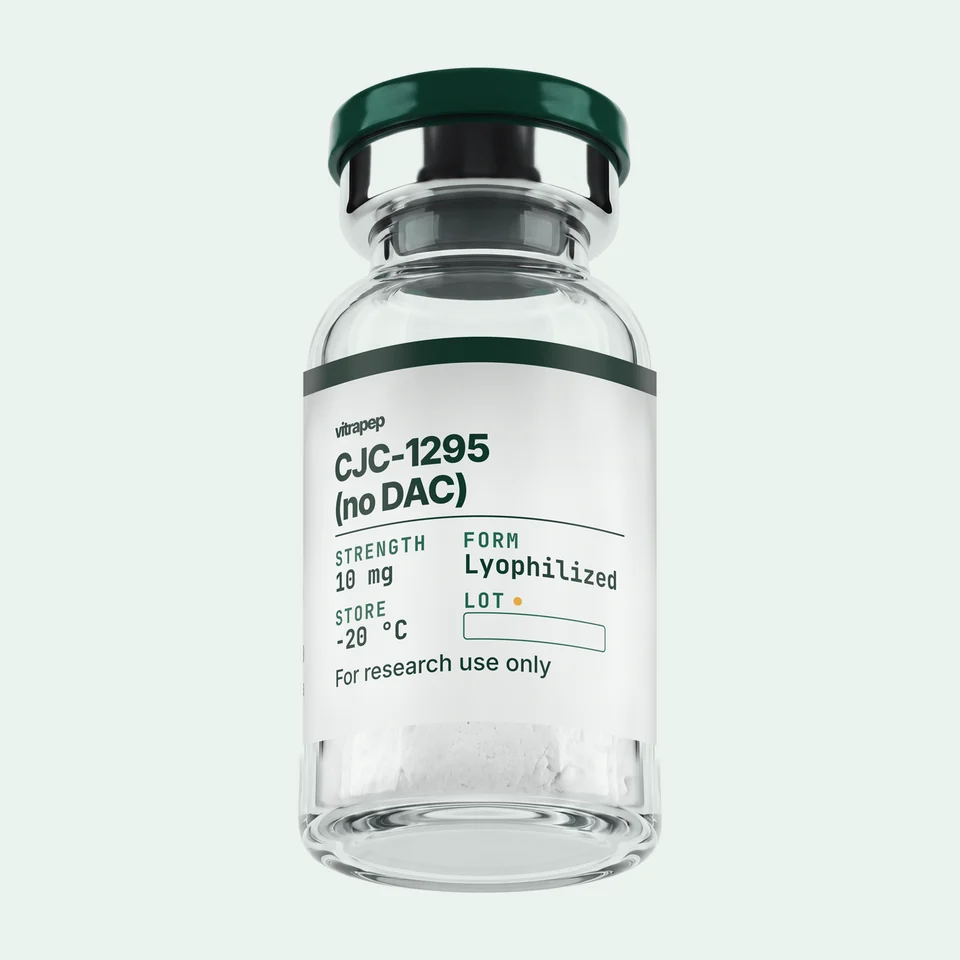
CJC-1295
Specifications for the CJC-1295 sold for laboratory research. COA available with each lot.
Frequently asked questions
What are the most commonly reported CJC-1295 side effects?
FDA summaries identify injection-site reactions and headache among the reported events. Other events include flushing, diarrhea, nausea, abdominal pain, dizziness and hypotension.
Can CJC-1295 affect heart rate?
Yes. FDA has identified increased heart rate among serious adverse events associated with CJC-1295. The available evidence is limited.
Did clinical trials report serious adverse events?
The published controlled study reported no serious adverse reactions. FDA's broader safety review identified serious adverse events, including increased heart rate and systemic vasodilatory reactions.
Is CJC-1295 FDA-approved?
No FDA-approved CJC-1295 medicine is identified in the cited FDA materials. FDA has raised safety and quality concerns about CJC-1295-related bulk substances proposed for compounding.
Are DAC and non-DAC CJC-1295 interchangeable?
The evidence does not establish that they are interchangeable. Most published human safety data concern the DAC form.
What to know now
- Human safety data for CJC-1295 are limited and focus mainly on the DAC form.
- Reported events include injection-site reactions, headache, flushing, gastrointestinal symptoms and cardiovascular effects.
- FDA has identified serious safety concerns and gaps in the available evidence.
What we’re watching
- Additional human studies that clearly identify the specific CJC-1295 form evaluated.
- FDA updates concerning CJC-1295-related bulk drug substances.
- Better characterization of immunogenicity, aggregation and cardiovascular safety.