Liraglutide vs semaglutide is a useful comparison because the medicines share a receptor target but differ in molecular design, duration of action and clinical-trial results. Both have FDA-approved prescription formulations. Head-to-head studies provide direct evidence, while approved indications depend on the brand and formulation being discussed.
Quick answer: Both medicines activate the GLP-1 receptor and have FDA-approved uses in specific prescription products. Direct head-to-head trials found greater average weight reduction with semaglutide than liraglutide in the studied populations. The choice of molecule, brand and indication matters because labels and trial populations differ.
What are the key differences between liraglutide and semaglutide?
Liraglutide and semaglutide are peptide-based GLP-1 receptor agonists, but their molecular modifications produce different pharmacokinetic profiles. Both mimic the activity of the endogenous incretin hormone GLP-1, which helps coordinate glucose regulation and appetite-related signaling.
Native GLP-1 is broken down rapidly by dipeptidyl peptidase-4. Liraglutide was modified with a fatty-acid side chain that supports albumin binding and prolongs its presence in circulation. Semaglutide includes an amino-acid substitution and a longer fatty-acid side chain, which also supports albumin binding and extends duration of action.
These design differences help explain why the approved weight-management formulations have different dosing frequencies. This article does not provide administration instructions. The central scientific point is that a shared receptor target does not mean the molecules are pharmacologically identical.
Both agents act at the GLP-1 receptor. Activation can increase glucose-dependent insulin secretion, reduce glucagon release when glucose is elevated, slow gastric emptying and influence appetite-related signaling. Their clinical effects depend on the product, population, treatment context and outcomes measured.
What did the STEP 8 head-to-head trial find?
STEP 8 found greater average weight reduction with semaglutide than liraglutide among adults with overweight or obesity who did not have diabetes.
Rubino et al. (2022) published STEP 8 in JAMA. The Phase 3b trial randomized 338 adults across 19 U.S. sites. Participants had overweight or obesity and did not have diabetes. The study compared semaglutide and liraglutide alongside lifestyle counseling over 68 weeks.
Mean body-weight change was a 15.8% reduction in the semaglutide group and a 6.4% reduction in the liraglutide group. The estimated between-group difference was 9.4 percentage points in favor of semaglutide. The study also reported that 70.9% of participants in the semaglutide group achieved at least 10% weight reduction, compared with 25.6% in the liraglutide group.
Gastrointestinal adverse events were common in both groups. They were reported by 84.1% of participants in the semaglutide group and 82.7% in the liraglutide group. Treatment discontinuations for any reason occurred in 13.5% and 27.6%, respectively. These figures describe the studied trial and should not be generalized to all patient groups or formulations.
STEP 8 is particularly useful because it directly compared the two molecules in a weight-management population. Its open-label active-treatment comparison is a limitation, although the study used matched placebos to support the design. The results establish a clear difference in average weight outcomes within this trial, not a universal result for every individual.
What did the SUSTAIN 10 trial find in type 2 diabetes?
SUSTAIN 10 found greater average reductions in glycated hemoglobin and body weight with semaglutide than liraglutide in adults with type 2 diabetes.
Capehorn et al. (2020) published the Phase 3b study. It randomized 577 adults with type 2 diabetes who were receiving other glucose-lowering medicines. The primary outcome was change in glycated hemoglobin, while body-weight change was a confirmatory secondary outcome.
Mean glycated hemoglobin decreased by 1.7 percentage points in the semaglutide group and 1.0 percentage point in the liraglutide group. Mean body weight decreased by 5.8 kilograms and 1.9 kilograms, respectively. The trial reported more gastrointestinal adverse events and treatment discontinuations with semaglutide, while overall safety profiles were described as generally similar.
This trial adds a second population to the comparison. STEP 8 focused on adults with overweight or obesity without diabetes. SUSTAIN 10 focused on adults with type 2 diabetes. The direction of the average efficacy findings favored semaglutide in both settings, but the outcome measures and participants were different.
What did earlier obesity research show?
An earlier Phase 2 obesity trial also found greater average weight reduction with semaglutide than liraglutide in the studied groups.
O'Neil et al. (2018) reported a randomized, double-blind trial in The Lancet. The study included 957 adults with obesity and compared multiple semaglutide groups with liraglutide and placebo. At the end of the 52-week study, the semaglutide groups had mean weight reductions ranging from 6.0% to 13.8%, depending on the study group. The liraglutide group had a mean reduction of 7.8%, and placebo had a 2.3% reduction.
The Phase 2 study helped establish the clinical research rationale for the later STEP program. It was dose-ranging and should not be treated as equivalent to a pivotal Phase 3 study. Taken with STEP 8, it shows a consistent research signal for greater average weight reduction with semaglutide in the studied obesity populations.
What did earlier obesity research show
| Trial | Participants | Follow-up | Main comparison | Result |
|---|---|---|---|---|
| O'Neil et al., 2018 | 957 adults with obesity | 52 weeks | Semaglutide groups vs liraglutide and placebo | Semaglutide groups showed greater mean weight reduction than liraglutide in the reported comparison |
| STEP 8, 2022 | 338 adults with overweight or obesity without diabetes | 68 weeks | Semaglutide vs liraglutide | Mean change: −15.8% vs −6.4% |
| SUSTAIN 10, 2020 | 577 adults with type 2 diabetes | 30 weeks | Semaglutide vs liraglutide | HbA1c change: −1.7 vs −1.0 percentage points; weight change: −5.8 vs −1.9 kg |
The trials support a positive comparison for semaglutide on average weight and glucose outcomes. They do not establish that every person will respond in the same way. Nor do they eliminate the importance of tolerability, clinical history and product-specific prescribing information.
Are liraglutide and semaglutide FDA-approved?
Yes. Specific prescription products containing liraglutide and semaglutide are FDA-approved for defined indications. The exact approved uses differ by product and label.
FDA's Saxenda label describes Saxenda as a liraglutide product approved for long-term weight reduction in eligible adults and certain pediatric patients with obesity. Other liraglutide products have different labels, including diabetes indications. Readers should not treat one brand's label as applying to all liraglutide products.
FDA's Wegovy label describes Wegovy as a semaglutide product with FDA-approved indications that include long-term weight reduction in eligible adults and pediatric patients with obesity. Its current label also includes cardiovascular risk reduction in certain adults with established cardiovascular disease and overweight or obesity. The latest FDA label should be consulted because indications and warnings can change.
Approval is product-specific. It does not mean that every semaglutide or liraglutide research material, compounded formulation or online listing is FDA-approved. The FDA-approved products are prescription medicines with defined manufacturing and labeling requirements.
What should the comparison not imply?
The results should not be used to declare one molecule universally superior for every indication. Direct trials differ in participants, endpoints, follow-up periods and background treatment. Weight-management outcomes cannot automatically be transferred to diabetes treatment or other conditions.
The comparison also involves different brand formulations and product labels. The STEP 8 trial examined the weight-management formulations in adults without diabetes. SUSTAIN 10 examined diabetes formulations in adults with type 2 diabetes. The populations and outcome measures are not interchangeable.
A balanced conclusion is that semaglutide showed greater average reductions in weight in the direct trials reviewed here. It also showed greater average glycemic improvement in SUSTAIN 10. Both molecules have a well-developed clinical evidence base, and both have approved prescription products for specific uses.
Product information and related Vitrapep research
Vitrapep sells semaglutide for laboratory research use only. It is not for human or veterinary use. See the Vitrapep semaglutide product page. Liraglutide is discussed here as an approved prescription medicine comparator, not as a Vitrapep product.
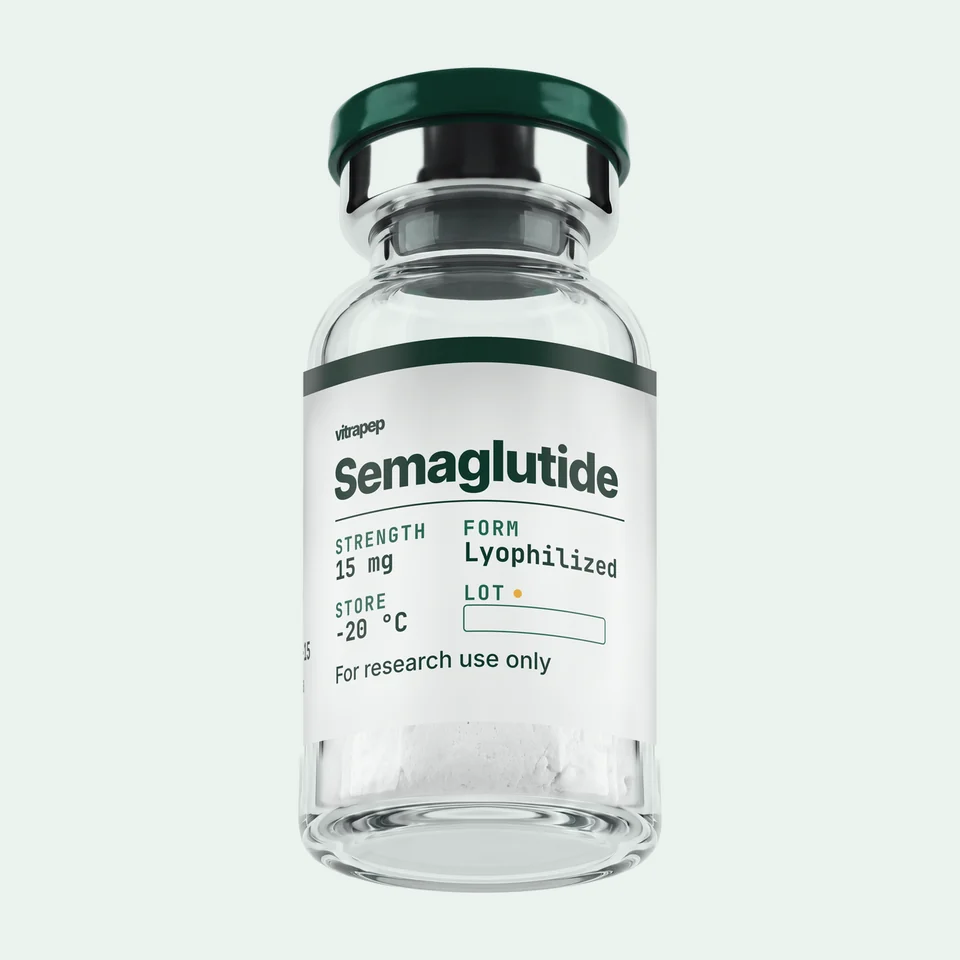
Vitrapep semaglutide product page
Specifications for the Vitrapep semaglutide product page sold for laboratory research. COA available with each lot.
Related reading: What is semaglutide?, GLP-1 receptor agonists class overview, and GLP-1 class comparison.
FAQ
Is semaglutide more effective than liraglutide for weight reduction?
In STEP 8, semaglutide produced greater average weight reduction than liraglutide over 68 weeks in adults with overweight or obesity without diabetes. Individual responses can differ, and the result applies to the studied trial population.
Are liraglutide and semaglutide both GLP-1 peptides?
Both are peptide-based GLP-1 receptor agonists. They share a receptor target but have different molecular modifications and pharmacokinetic profiles.
What did SUSTAIN 10 show?
In adults with type 2 diabetes, SUSTAIN 10 reported greater average reductions in glycated hemoglobin and body weight with semaglutide than liraglutide. It also reported more gastrointestinal adverse events and discontinuations with semaglutide.
Are both medicines FDA-approved?
Yes. FDA-approved prescription products include Saxenda for liraglutide and Wegovy for semaglutide. Their approved indications are product-specific and should be checked against current labels.
Does the evidence mean semaglutide is better for everyone?
No. Trial averages do not predict every person's response. The evidence also differs by indication, formulation and participant group.
What to know now
- Both medicines activate the GLP-1 receptor and have FDA-approved prescription products.
- STEP 8 and SUSTAIN 10 reported greater average efficacy outcomes with semaglutide in their respective study populations.
- Brand, formulation, indication and current FDA labeling matter when interpreting the comparison.
What we’re watching
- New comparative data that directly evaluate the currently approved formulations and additional patient populations.
- FDA label updates for Wegovy and Saxenda, including changes to indications and safety information.