Peptide hormones are chains of amino acids that glands release into the blood to carry signals between organs. Insulin, glucagon, oxytocin and vasopressin all belong to this group. This guide covers how cells make them, how they signal through receptors on the cell surface, and where the best-known ones come from.
Quick answer: What is a peptide hormone? A hormone made of a chain of amino acids. Well-known examples are insulin and glucagon from the pancreas, oxytocin and vasopressin released from the posterior pituitary, ACTH from the anterior pituitary, parathyroid hormone from the parathyroid glands, calcitonin from the thyroid and ghrelin from the stomach. They bind receptors on the outside of target cells and act through signals inside the cell.
What makes a hormone a peptide hormone
Physiology textbooks sort hormones by their chemistry. OpenStax’s Anatomy and Physiology describes peptide hormones as short chains of amino acids and protein hormones as longer polypeptides. Its example of a peptide hormone is antidiuretic hormone (ADH), also called vasopressin. Growth hormone, a much longer chain, is listed as a protein.
The line between the two is not sharp. IUPAC’s nomenclature rules say polypeptides of more than about 50 residues are usually called proteins, and note that authors differ greatly on where they start using the term. Our guides to peptide vs protein and what a polypeptide is cover that line in more detail.
Other hormone groups are built differently. Steroid hormones are derived from cholesterol and can diffuse through the cell membrane to reach receptors inside the cell. Our page on peptides vs steroids compares the two classes.
Made as longer chains, then cut
Most peptide hormones are not made at their final length. The cell builds a longer precursor and then cuts the hormone out of it. The UniProt protein database records these steps for each human hormone:
- Insulin. The precursor is 110 residues long. After the signal sequence is removed, a connecting segment called the C peptide is cut out. What remains is a 30-residue B chain and a 21-residue A chain.
- ACTH. Adrenocorticotropic hormone is residues 138 to 176 of pro-opiomelanocortin (POMC), a 267-residue precursor that also contains other peptides. OpenStax notes that ACTH comes from POMC.
- Glucagon. Glucagon is residues 53 to 81 of proglucagon. The same precursor also contains the sequence of GLP-1.
- Oxytocin and vasopressin. Each is nine residues long and sits right after the signal sequence of its own precursor. A protein called neurophysin follows it in the same chain.
One family of enzymes that does this kind of cutting is the proprotein convertases. A 2012 review describes them as nine secretory serine proteases that activate precursor proteins by cleavage at single or paired basic residues.
How peptide hormones signal
Water-soluble hormones cannot diffuse through the lipid bilayer of the cell membrane. OpenStax explains that they pass their message to a receptor at the surface of the cell instead. The receptor then sets off changes inside the cell.
The best-known route runs through G proteins. In the textbook’s account of the cAMP system, the hormone binds its membrane receptor, the receptor activates a G protein, and the G protein activates an enzyme called adenylyl cyclase. Adenylyl cyclase converts ATP to cyclic AMP (cAMP). cAMP is a second messenger. It activates protein kinases in the cytosol, which start a chain of phosphorylation. The enzyme phosphodiesterase breaks cAMP down quickly, which ends the signal. Some G proteins lower cAMP instead of raising it.
A second route uses the enzyme phospholipase C. It splits a membrane phospholipid into diacylglycerol (DAG) and inositol triphosphate (IP3). DAG activates protein kinases. IP3 releases calcium ions from stores inside the cell, and the calcium then acts as another second messenger, partly through a protein called calmodulin.
These cascades multiply the signal: thousands of signaling events can start at once in response to a very low concentration of hormone.
A 2020 review notes that many of the body’s own peptides activate GPCRs, and UniProt places the receptors for most of the hormones in Table 1 in the GPCR families. Insulin is different. OpenStax describes insulin as activating a tyrosine kinase receptor, which phosphorylates many substrates inside the cell, and UniProt places the insulin receptor in the tyrosine protein kinase family. Our guide to how peptides work covers receptor binding more broadly.
Well-known peptide hormones, by gland
Table 1 lists common examples. Residue counts and receptor types are from UniProt’s human entries.
Peptide hormones by gland, size and receptor type
| Hormone | Main source | Length (residues) | Receptor type |
|---|---|---|---|
| Insulin | Pancreas, beta cells | 51 (A chain 21, B chain 30) | Tyrosine kinase receptor |
| Glucagon | Pancreas, alpha cells | 29 | GPCR |
| Somatostatin | Pancreas, delta cells; also the hypothalamus | 14 or 28 | GPCR |
| Oxytocin | Made in the hypothalamus, released from the posterior pituitary | 9 | GPCR |
| Vasopressin (ADH) | Made in the hypothalamus, released from the posterior pituitary | 9 | GPCR |
| ACTH (corticotropin) | Anterior pituitary, cut from POMC | 39 | GPCR |
| Parathyroid hormone (PTH) | Parathyroid glands | 84 | GPCR |
| Calcitonin | Thyroid, parafollicular cells | 32 | GPCR |
| Ghrelin | Stomach | 28, with an octanoyl group on serine 3 | GPCR |
| Leptin (a protein) | Adipose cells | 146 (167 before the signal sequence is removed) | Type I cytokine receptor |
Two rows need a note. Parathyroid hormone, at 84 residues, is past IUPAC’s rough 50-residue line, yet OpenStax calls it a peptide hormone, so the two words are used loosely. Ghrelin carries a fatty-acid group: the 1999 paper that identified it in stomach tissue reported a 28-residue peptide with serine 3 n-octanoylated, a change it found essential for activity.
Leptin: a hormone that is a protein
Leptin often appears in lists of peptide hormones because it is also an amino-acid chain that signals through the blood. By size, it is a protein. UniProt records the human leptin precursor as 167 residues. A 21-residue signal sequence is removed, leaving a 146-residue chain. OpenStax calls leptin a protein made by adipose cells that acts by binding brain neurons involved in energy intake and expenditure. Its receptor is not a GPCR: UniProt places it in the type I cytokine receptor family. The gene was cloned in 1994, in work that described its product as part of a possible signaling pathway from adipose tissue.
Gut peptides and the incretins
The gut releases many peptide hormones. OpenStax names gastrin, secreted in response to stomach distention, and secretin and cholecystokinin (CCK), released from the small intestine. Three more come up often in research:
- GLP-1 (glucagon-like peptide-1) is cut from proglucagon, the same precursor as glucagon. It is one of the two incretin peptides.
- GIP (glucose-dependent insulinotropic polypeptide) is the other incretin peptide. A 2007 review notes that both are secreted within minutes of nutrient ingestion.
- PYY (peptide YY) is a 36-residue gut peptide.
Our GLP-1 class overview covers this group.
Natural hormones and lab-made copies
Some medicines are lab-made versions of these hormones. A 2021 review counts more than 80 peptide drugs that have reached the market since insulin. Human insulin for medical use is produced by recombinant DNA technology in a laboratory strain of E. coli, according to its FDA label. Octreotide is an analog: its label describes a cyclic octapeptide with actions mimicking those of the natural hormone somatostatin, which is 14 or 28 residues long. See natural and synthetic peptides for the difference between a copy and an analog.
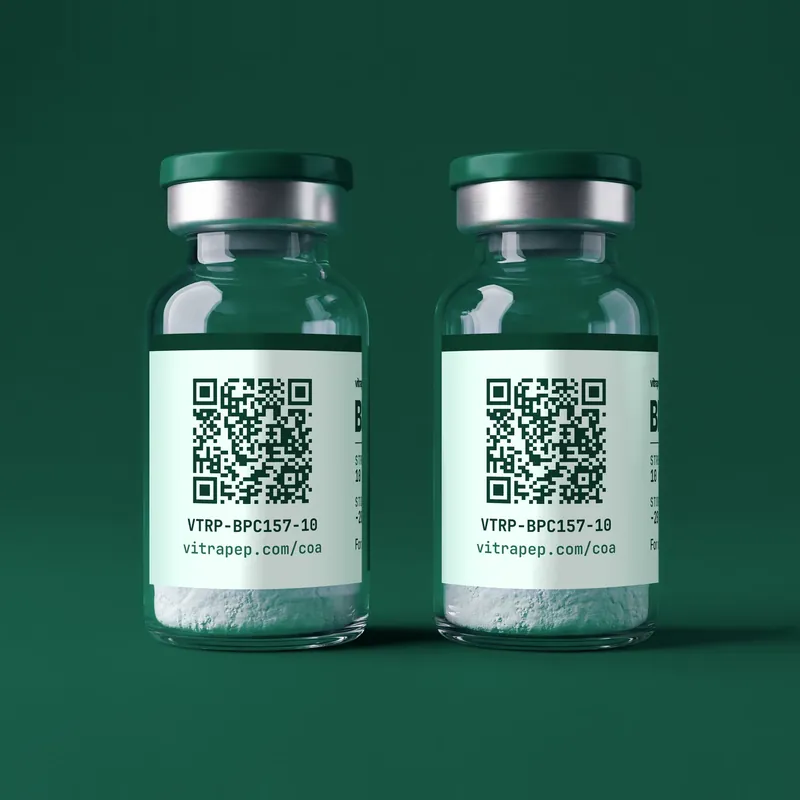
Vitrapep Research Catalog
Research peptides supplied as laboratory reference compounds, each lot with a third-party certificate of analysis. For laboratory research use only, not for human or veterinary use.
Frequently asked questions
What is a peptide hormone?
A hormone made of a short chain of amino acids. It binds receptors on the surface of target cells.
Is insulin a peptide or a protein?
It sits near the line. Insulin has 51 residues in two chains, just over IUPAC’s rough 50-residue cut-off for proteins, and IUPAC notes that authors draw that line in different places.
Is leptin a peptide hormone?
Leptin is a hormone, but by size it is a protein. The secreted chain is 146 residues long, and its receptor belongs to the type I cytokine receptor family, not the GPCRs.
Why can’t peptide hormones enter cells?
They are water-soluble, so they cannot diffuse through the lipid bilayer of the cell membrane. They bind a receptor on the outside of the cell, and second messengers carry the signal inside.
What to know now
- Definition: peptide hormones are short amino-acid chains; protein hormones are longer chains.
- Made long, then cut: insulin, ACTH, glucagon, oxytocin and vasopressin are all cut from longer precursors.
- Surface receptors: water-soluble hormones cannot cross the membrane, so they bind receptors on the cell surface.
- Second messengers: GPCR signals pass through cAMP, IP3, DAG and calcium; insulin uses a tyrosine kinase receptor.
- By gland: pancreas (insulin, glucagon, somatostatin), pituitary (oxytocin, vasopressin, ACTH), parathyroid (PTH), thyroid (calcitonin), stomach (ghrelin).
- Leptin: a hormone from adipose cells, but a 146-residue protein with a cytokine-type receptor.